If the flames just went out and you’re standing in the driveway wondering who to call next, the order matters: call 911 and the Colorado Springs Fire Department first if you haven’t already, then the Red Cross Pikes Peak chapter if you need somewhere to stay, then your insurance company, and finally a restoration company to board up the property and start drying out firefighting water. Call SDU Catastrophe Response at (303) 656-9934: it’s an IICRC Certified Firm that answers 24/7, so that last call can go out the same night the fire department releases the scene.
Each of those calls unlocks something different, and making them out of order wastes time you don’t have. This guide walks through who to call, when, and why, for homeowners anywhere from Old Colorado City to Black Forest to Monument.
What’s the Right Order to Call People After a House Fire?
The order is 911 and the fire department, the Red Cross Pikes Peak chapter if you’re displaced, your insurance company, and then a restoration company for board-up and cleanup. Each call solves a different problem: safety, shelter, a claim number, and a secured structure.
Skipping a step usually costs you later. Homeowners who call a restoration company before their insurer sometimes miss documentation the adjuster wants. Homeowners who wait on the Red Cross because they assume they’ll figure out lodging themselves often end up in a hotel they’re paying for out of pocket that a covered loss would have handled differently.
When Should You Call 911 or the Fire Department?
Call 911 immediately if the fire is still active, if anyone is hurt, or if you smell gas or see sparking wires, even after the visible flames look out. Hot spots can reignite hours later inside wall cavities and attics, and firefighters are trained to check for that before they release the scene to you.
Don’t re-enter the structure until the fire department clears it. Structural damage from heat, water used to fight the fire, and compromised framing aren’t always obvious from the doorway, and carbon monoxide can linger in a space that looks fine.
When Do You Call the Red Cross Pikes Peak Chapter?
Call the Red Cross Pikes Peak chapter as soon as the fire department confirms your home isn’t safe to stay in that night. Their disaster team can arrange emergency lodging, food, clothing, and replacement medication for families displaced by a home fire, often within hours of a referral from the responding fire crew.
The American Red Cross also has a practical checklist for the first 24 hours: who to notify, what records to request, and how to start tracking expenses for your insurance claim. Keep every receipt from this point forward; most policies reimburse additional living expenses, but only with documentation.
When Should You Call Your Insurance Company?
Call your homeowners insurance company within 24 to 48 hours of the fire, once everyone is safe and immediate shelter is sorted. Have your policy number, the fire department’s incident number, and a rough description of the damage ready; the adjuster will walk you through next steps and may authorize emergency board-up as part of the claim.
Most standard homeowners policies cover fire damage, including smoke and soot damage to contents, and many also cover additional living expenses while the home is unlivable, though coverage details vary by policy. Insurance Information Institute guidance on settling claims after a disaster is worth reading before that call. If you want a sense of what fire restoration work typically runs in this market before you talk numbers with the adjuster, our fire damage restoration cost guide breaks down the ranges.
When Do You Call a Restoration Company for Board-Up and Cleanup?
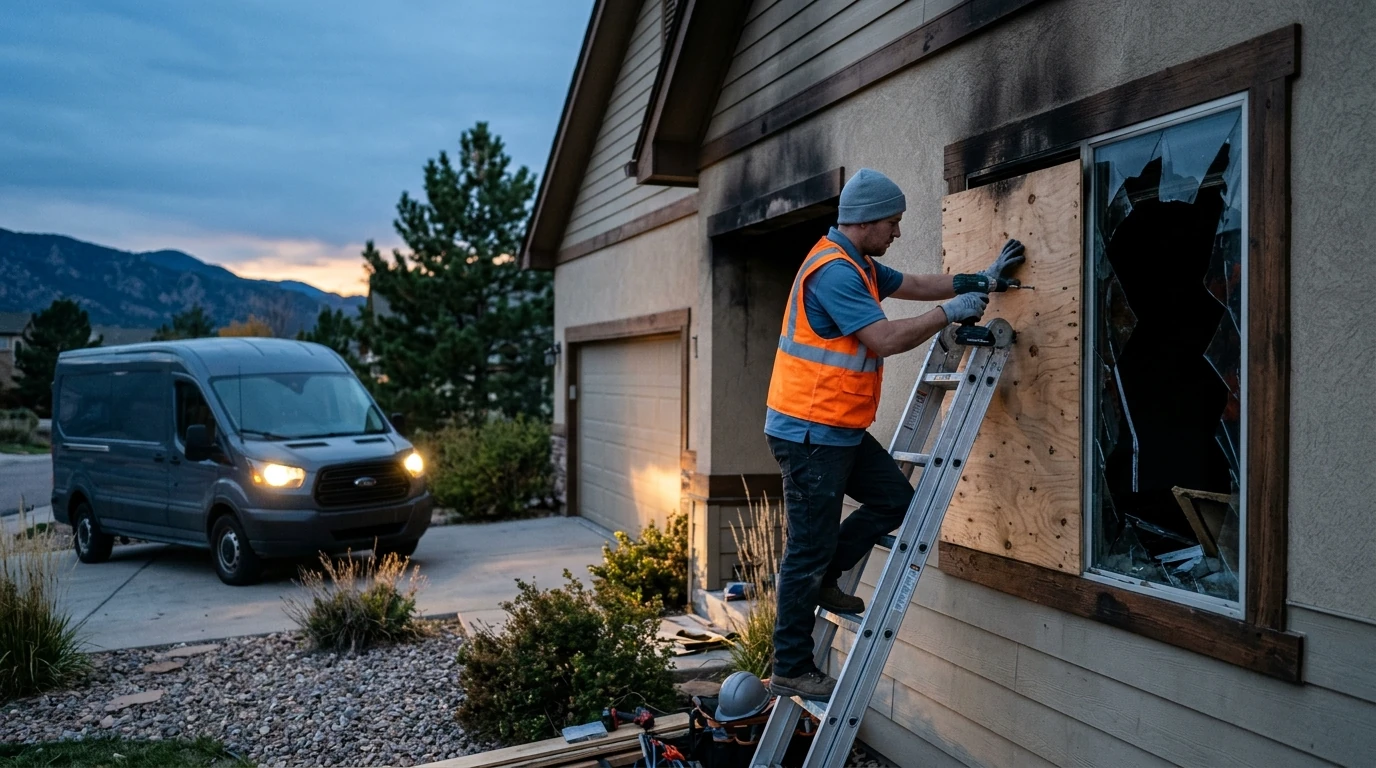
Call a restoration company as soon as the fire department releases the property, usually the same day, so broken windows and roof openings get boarded before Front Range wind or a surprise hailstorm turns into a second loss. An unsecured house is also an open invitation for weather, animals, and theft overnight.
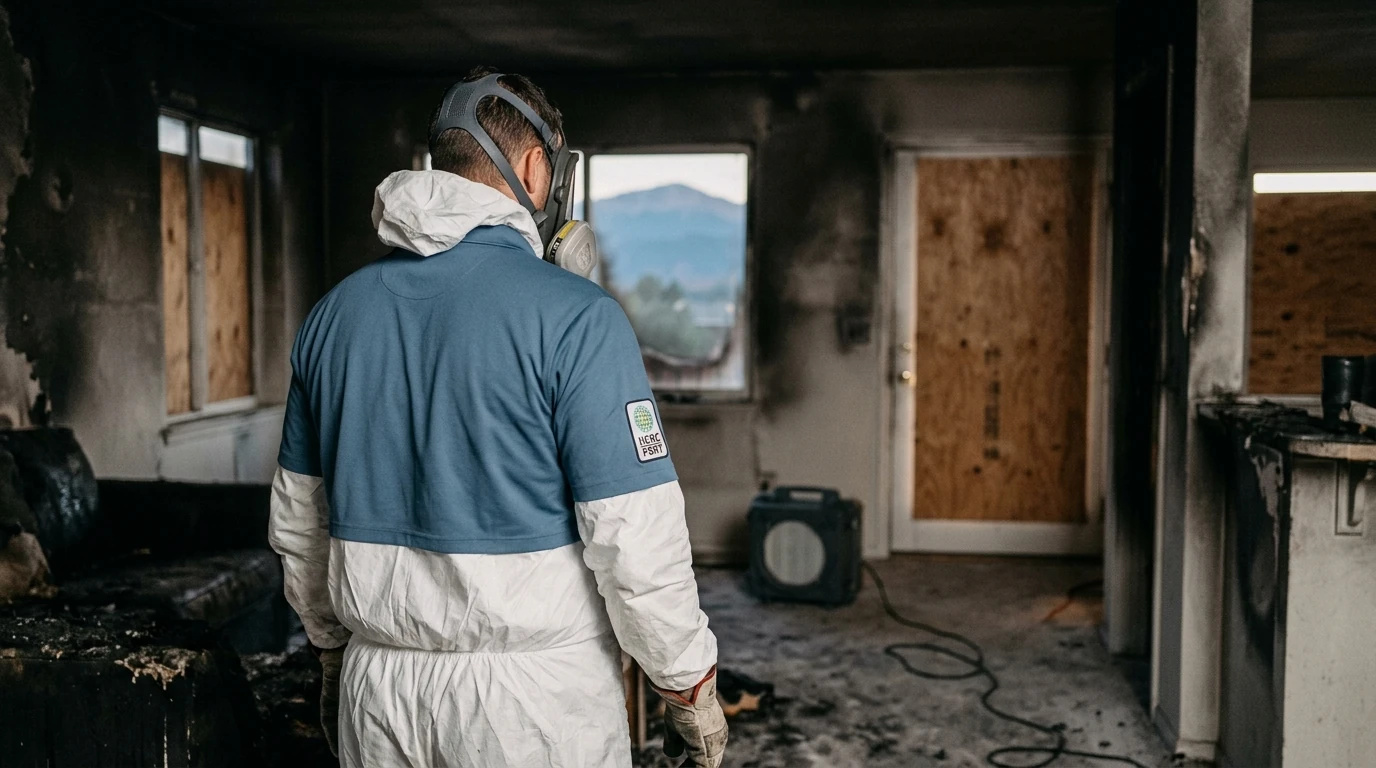
A fire and smoke restoration crew handles emergency board-up, extraction of water used to fight the fire, and the start of smoke damage restoration and odor removal. In a historic Old North End or Manitou Springs home with original woodwork, how quickly soot gets addressed matters more than in newer Briargate construction, since porous historic materials absorb smoke odor faster the longer it sits.
What Happens When You Call a Restoration Company After a Fire?
The first call is mostly information gathering: your address, whether the fire department has released the structure, what rooms were affected, and whether the roof or any exterior walls were breached. From there, a technician can typically get a board-up and initial assessment scheduled the same day.
On site, the crew checks for standing water from firefighting efforts, stabilizes openings with plywood or tarping, and starts documenting damage room by room for the insurance file. Fire and smoke restoration work generally follows the ANSI/IICRC S700 standard, which covers everything from soot categorization to HEPA air scrubbing and content cleaning. Our fire damage restoration process guide walks through each phase in more detail.
When Is It Safe to Go Back Inside the House?
It’s safe to go back inside only after the fire department or a restoration professional confirms the structure is stable and the air is breathable. Soot, ash, and firefighting water create respiratory and electrical hazards that aren’t obvious just standing at the doorway.
Even a “light damage” room down the hall from the fire can have soot settled into HVAC ductwork and soft materials, which is part of why a professional walkthrough before you move back in matters, not just a visual check from the hallway.
A documented board-up call today protects both the structure and the insurance claim from further loss. Call (303) 656-9934 to get a technician scheduled for an assessment.
About SDU Catastrophe Response
SDU Catastrophe Response is an IICRC Certified Firm serving Colorado Springs and the surrounding Front Range, including Monument, Fountain, Falcon, and Black Forest. Its technicians hold IICRC credentials in water damage, structural drying, mold remediation, and fire and smoke restoration (FSRT), and the company answers calls 24/7 for fire, water, storm, and biohazard response across the region.