24/7 Emergency Water Removal & Cleanup in Colorado Springs
24/7 emergency water removal & cleanup in Colorado Springs and surrounding areas. IICRC-certified, insurance billing accepted. Call (303) 656-9934.
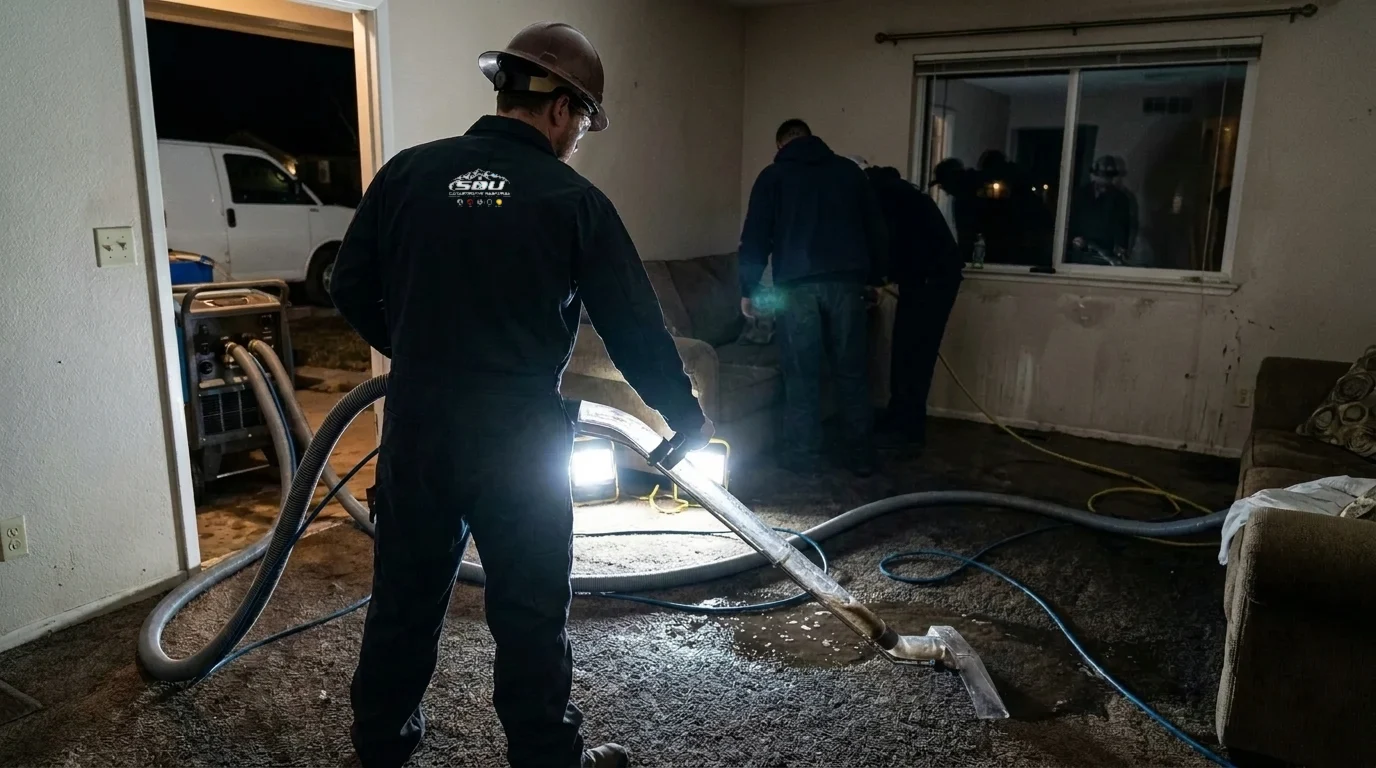
Standing water in your home right now? Call (303) 656-9934. We answer 24/7, and every minute water sits on flooring, under cabinets, or inside wall cavities is a minute closer to permanent material loss. Emergency water removal and cleanup is the first physical response to an active water event, pulling standing water out of the structure before it migrates further, before carpet pad and subfloor absorb more than they can give back, and before the clock on microbial growth starts running.
This is different from the repair work that follows a burst pipe or a flooded basement. This is the extraction phase itself: getting water off the surface and out of the building envelope as fast as the volume and the access allow, using pumps and vacuums sized to the loss rather than a shop-vac approach.
What Emergency Water Removal & Cleanup actually involves
The work starts with volume. A quarter inch of water across a kitchen floor is a mop-and-fan job. Two inches across a finished basement is a different equation entirely, one that calls for submersible pumps, truck-mounted extraction units, and in some cases weighted extraction tools that pull water out of carpet and pad in the same pass. Hard-surface flooring, carpet, upholstery, and even standing water trapped under luxury vinyl plank all extract differently, and the technician’s job is to match the tool to the material so nothing gets pushed deeper instead of out.
Category matters here too. Clean water from a supply line behaves very differently than water that has picked up contaminants from soil, flooring adhesive, or sitting time. The longer water sits, the more likely it has shifted category, which changes what can be saved and what has to come out. Extraction on an active loss typically happens within the first hours on-site, with technicians also pulling baseboards, checking wall cavities with moisture meters, and identifying trapped pockets of water that aren’t visible from the surface.
Our process
- Source and safety check. Confirm the water is no longer actively flowing or that the source is controlled, and check for electrical hazards before anyone steps into standing water.
- Volume extraction. Pumps and extraction units remove bulk standing water from floors, carpet, and pad, starting with the deepest or most saturated areas first.
- Hidden-water mapping. Moisture meters and thermal imaging locate water that has migrated under flooring, into baseboards, or up into drywall where it isn’t visible yet.
- Material triage. A decision gets made, room by room, on what can be dried in place, what needs to be pulled (carpet pad, baseboards, sometimes drywall), and what’s salvageable with aggressive drying.
- Setup for structural drying. Once bulk water is gone, air movers and dehumidifiers get positioned to begin the drying phase that follows extraction, with documentation of moisture readings as a baseline.
What separates a good water removal response from a bad one
The most common mistake on an active water loss is treating extraction as finished once the floor looks dry. Carpet can look and feel dry at the surface while the pad underneath stays saturated, and subfloor can hold moisture for days after the visible water is gone. A rushed extraction leaves that moisture in place, which is exactly what sets up mold colonization in the 24 to 48 hour window after a water event.
Insurance adjusters reviewing a water claim look for moisture readings taken at the start of the job, not just a final dry reading. They want to see that extraction depth matched the actual saturation, that Category 2 or 3 water was handled with appropriate material removal instead of an attempt to dry and save everything, and that the technician documented what was found under flooring and behind baseboards before those materials were disturbed. Skipping that documentation is the single biggest reason water claims get disputed later.
What does Emergency Water Removal & Cleanup cost?
Costs vary with the amount of standing water, the category of water, how far it has migrated, and how many rooms are affected. Every loss is different, which is why SDU Catastrophe Response provides a written scope before work begins rather than a flat quote over the phone. Most homeowners insurance policies cover emergency water extraction when the source is a sudden, accidental event like a burst pipe or appliance failure, though coverage for gradual leaks or flooding varies by policy.
| Scenario | Typical range |
|---|---|
| Single room, clean water, minimal extraction | $300 - $900 |
| Multiple rooms, carpet and pad extraction | $900 - $2,500 |
| Whole-floor extraction with hard-surface and carpet | $1,800 - $4,500 |
| Category 2 water requiring material removal | $2,500 - $6,000 |
| Large-volume loss (basement, multiple levels) | $4,000 - $10,000+ |
Seasonal & regional considerations
Colorado Springs sees sharp freeze-thaw swings through the winter months, and that cycle is a common trigger for supply line failures and frozen plumbing that lead to sudden standing water indoors. Many homes in the area have basements, and a water event on a lower level often has fewer visible warning signs before a homeowner discovers several inches of standing water at once. Fast extraction matters more in these lower-level losses because water has nowhere to drain and tends to spread across the entire footprint before it’s noticed.
Service area
SDU Catastrophe Response handles emergency water removal and cleanup across Colorado Springs and the surrounding region, including the nearby communities that share the same freeze-thaw and basement housing patterns.
If water is actively spreading across your floors right now, don’t wait on the drying phase to figure itself out. Call (303) 656-9934 to get extraction equipment on-site and stop the water before it reaches more of your home.
Frequently Asked Questions
Does homeowners insurance cover emergency water removal and cleanup?
How long can water sit before it becomes a bigger problem?
What's the difference between extraction and drying?
Can carpet and pad be saved after a water event?
What should I do while waiting for an extraction crew to arrive?
Looking for the best emergency water removal & cleanup company in Colorado Springs?
SDU Catastrophe Response provides emergency water removal & cleanup in Colorado Springs, CO and the surrounding area. We answer calls 24/7 — call (303) 656-9934 for immediate help.
Need Emergency Water Removal & Cleanup now?
We respond 24/7 across Colorado Springs and surrounding CO cities.