TL;DR: Fire damage restoration in Colorado Springs typically runs from $300 to $1,500 for smoke odor treatment in a single room, up to $100,000 or more for a structural fire that destroyed framing and drywall. The biggest cost drivers are how far the fire and smoke traveled, the type of soot left behind, how much water firefighting crews used, and whether reconstruction is needed on top of cleanup. Most of the bill goes through your homeowners insurance claim if the fire was accidental.
If you just watched fire crews leave your Briargate or Old North End home and you’re standing in the driveway wondering what this is going to cost before your adjuster even calls back, you’re not alone. Fire damage pricing swings wildly because no two fires behave the same way. A grease fire contained to a kitchen looks nothing like a structure fire that burned through a roofline. Here’s how the numbers actually break down.
What Does Fire Damage Restoration Typically Cost?
Most Colorado Springs fire damage jobs fall into a handful of predictable tiers based on how much of the structure was affected and how far smoke traveled.
| Scenario | Typical Cost Range |
|---|---|
| Smoke odor only, no visible burn damage | $300 - $1,500 |
| Single room with scorched contents and surface soot | $3,000 - $8,000 |
| Multi-room fire with smoke throughout the HVAC system | $15,000 - $40,000 |
| Structural fire: burned framing, drywall, flooring loss | $40,000 - $100,000 |
| Whole-structure loss requiring full reconstruction | $100,000 - $250,000+ |
| Firefighting water damage layered onto fire cleanup | $2 - $7 per square foot additional |
These are typical industry ranges, not quotes. Every fire scene gets a written inspection and scope before any work starts, because the same square footage can cost very differently depending on what burned and what’s left to rebuild.
What Drives Fire Damage Restoration Costs Up or Down?
Four factors move the price more than anything else: how far the smoke traveled, what kind of soot it left, how much water was used to fight the fire, and whether structural materials need to be replaced.
Smoke travel and soot type. A contained kitchen fire might only need surface cleaning in one room. But smoke from any fire moves through HVAC ducts, wall cavities, and attic space fast, which is why multi-room jobs cost several times more than single-room ones even when the actual flame damage was small. Protein-based soot from a grease or food fire is sticky and hard to remove without specialized cleaning agents. Synthetic soot from burned plastics and furniture is often more corrosive to metal fixtures and electronics, which can add remediation steps.
Water from firefighting. Fire crews use a lot of water, and in Colorado Springs’ older housing stock around Old Colorado City and Downtown, that water often sits in plaster walls, hardwood subfloors, and insulation long after the flames are out. That’s a second mitigation job layered on top of the soot cleanup, typically priced separately by square footage.
Contents versus structure. Cleaning and restoring furniture, electronics, and personal items (pack-out, ultrasonic cleaning, ozone treatment) is billed differently than structural repair. A loss with high-value contents can add significantly to the total even if the structure itself is mostly intact.
Reconstruction scope. Once charred framing, subflooring, or roof trusses have to come out, you’ve moved from a restoration job into a rebuild. That’s where costs jump from the thousands into six figures, since it now involves permitted construction work, not just cleaning and drying.
Does Homeowners Insurance Cover Fire Damage Restoration?
Most standard homeowners policies cover fire damage that’s sudden and accidental, including the structure, smoke damage to contents, and often additional living expenses while the home is unlivable. Check your specific policy for exclusions and coverage limits before assuming a full payout.
What the insurance adjuster’s scope typically includes is a line-item breakdown of mitigation (the emergency cleanup, drying, soot removal, odor treatment) separate from reconstruction (replacing drywall, framing, flooring, cabinetry). Mitigation usually gets approved fast because it prevents further loss. Reconstruction often needs a second, more detailed scope and sometimes a second adjuster visit, especially on larger losses.
Fires caused by arson, unpaid utility shutoffs, or long-term neglect (like an unmaintained chimney) can complicate or void coverage, so document the cause as clearly as you can with your fire department’s incident report.
What Does the Fire Damage Restoration Process Actually Involve?
Fire restoration happens in a set sequence: securing the structure, assessing and documenting damage, removing soot and odor, drying any firefighting water, then repairing or rebuilding what was lost.
- Emergency board-up and securing. Broken windows, damaged doors, and exposed roof sections get tarped or boarded to stop weather and theft exposure the same day.
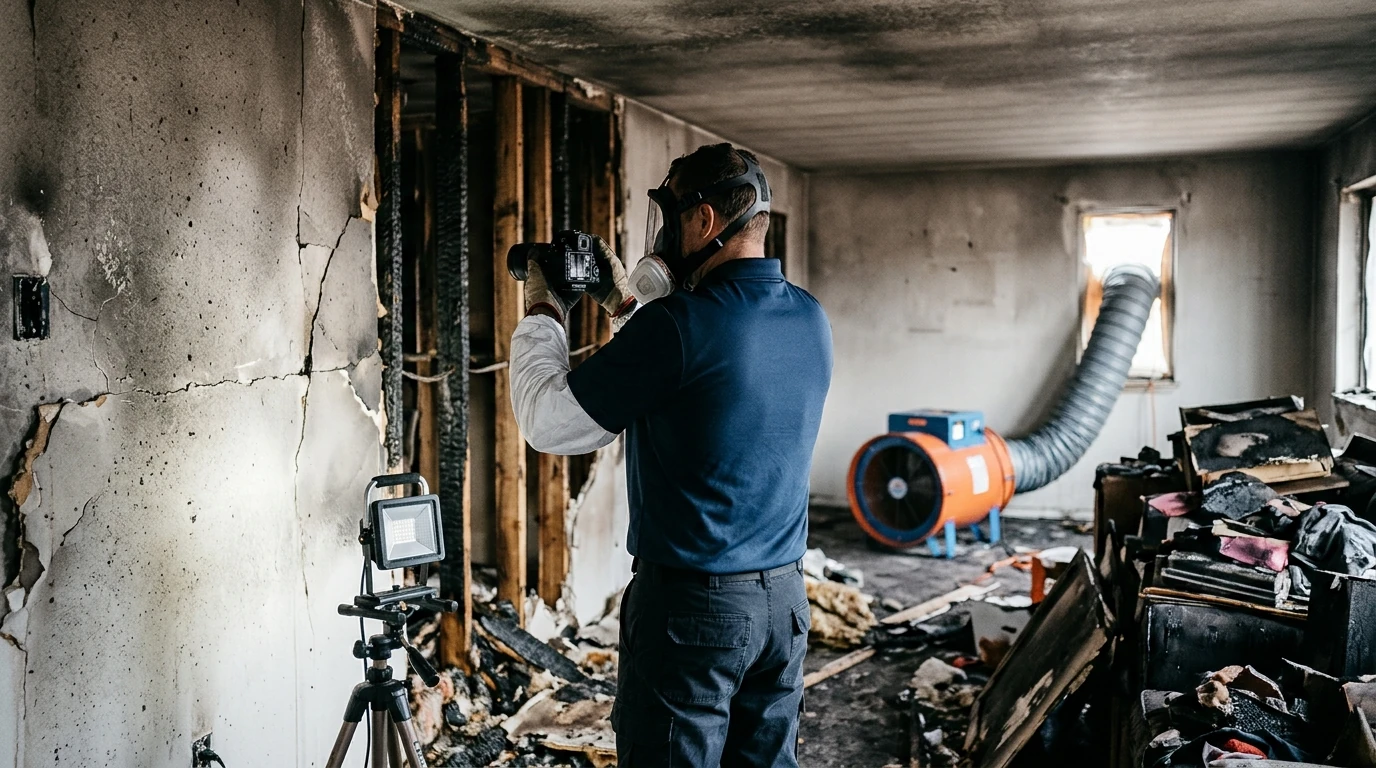
- Damage assessment and moisture mapping. A technician documents soot patterns, structural damage, and any water intrusion from firefighting, building the scope your insurer will reference.
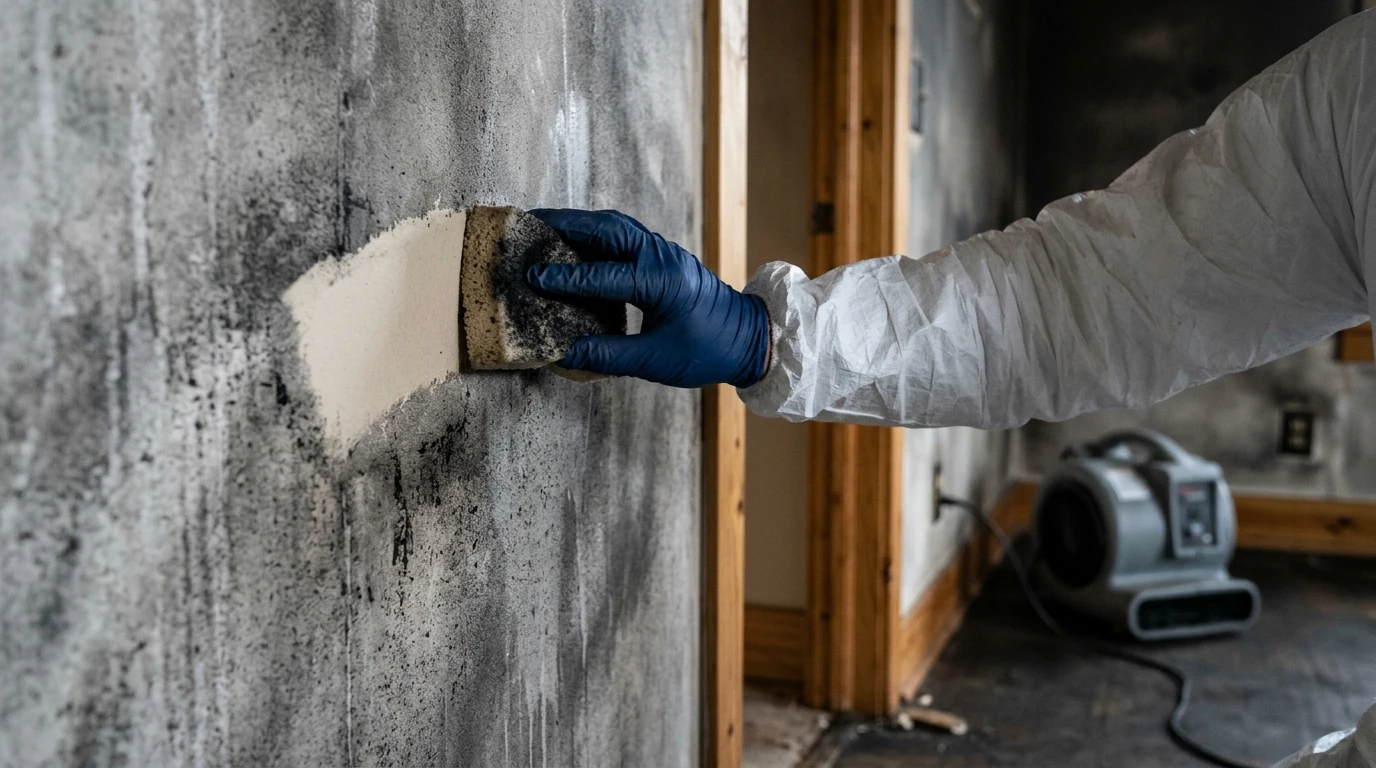
- Soot and residue removal. Walls, ceilings, and HVAC systems get cleaned using dry sponges, chemical sponges, or wet cleaning depending on the soot type, following the ANSI/IICRC S700 standard for fire and smoke restoration.
- Odor treatment. Hydroxyl generators, thermal fogging, or ozone treatment (in unoccupied spaces) neutralize smoke odor trapped in porous materials like drywall and insulation rather than just masking it.
- Structural drying, if firefighting water was involved, using air movers and dehumidifiers to get affected materials back to normal moisture content.
- Reconstruction, if needed, replacing drywall, flooring, cabinetry, or framing to bring the space back to pre-loss condition.
For a fuller walkthrough of each phase, see our fire damage restoration process guide.
Who Should You Call First After a Fire?
Once the fire department clears the structure, call your insurance agent to open a claim and a fire restoration company to start mitigation before soot sets into porous materials. Waiting even a few days lets acidic soot residue etch into metal, plastic, and finishes, which raises the eventual cost.
SDU Catastrophe Response handles the full sequence for Colorado Springs homes and businesses, from board-up through structural drying and smoke odor removal, and works directly from the insurance scope so there’s one documented record from first inspection to final repair.
Starting the inspection early gives you a written scope you can hand straight to your adjuster, which tends to move the claim faster than waiting for estimates to trickle in piecemeal.
About SDU Catastrophe Response
SDU Catastrophe Response is an IICRC Certified Firm serving Colorado Springs, CO and surrounding communities including Monument, Fountain, Security-Widefield, Falcon, and Black Forest. The company holds IICRC certifications in water restoration (WRT), structural drying (ASD), mold remediation (AMRT), and fire and smoke restoration (FSRT), and operates on a 24/7 emergency basis. Its crews handle fire damage restoration, smoke damage restoration, odor removal, water damage restoration, mold remediation, storm damage restoration, and related cleanup and sanitization services across the Front Range.
Need help now? Call SDU Catastrophe Response at (303) 656-9934.