Odor Removal and Deodorization in Colorado Springs
24/7 odor removal and deodorization in Colorado Springs and surrounding areas. IICRC-certified, insurance billing accepted. Call (303) 656-9934.
A house can look completely restored and still smell like the fire, the flood, or the pet accident that happened months ago. Odor molecules bind to drywall, framing lumber, subfloor, and HVAC ductwork in ways that surface cleaning never reaches, which is why air fresheners and a few open windows rarely solve the problem. If a smell keeps coming back after rain, after the heat kicks on, or whenever the house warms up in the afternoon sun, the odor is living inside the materials, not just in the air.
What Odor Removal and Deodorization actually involves
Odor removal is a diagnostic process before it’s a treatment process. Smoke odor, sewage odor, mildew smell, and decomposition odor each behave differently, soak into different materials, and respond to different equipment. A technician trained in IICRC FSRT protocols approaches smoke residue differently than a tech treating organic odor from water damage, because the chemistry isn’t the same.
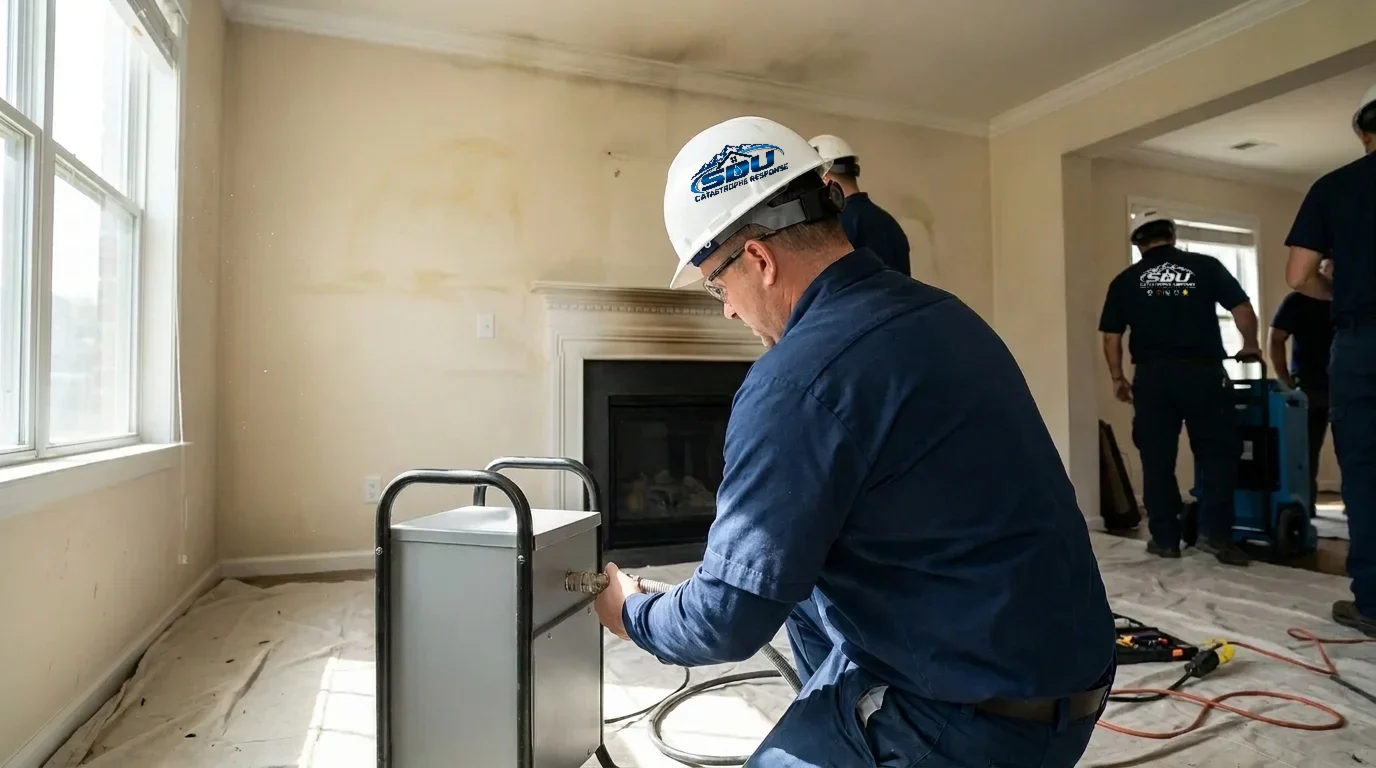
The actual work usually combines several tools: hydroxyl generators that break down odor molecules without the byproducts ozone leaves behind, ozone treatment for unoccupied spaces where a stronger, faster reaction is appropriate, and thermal fogging that carries deodorizing agents into the same cracks, pores, and cavities that smoke or moisture penetrated in the first place. Porous materials like carpet padding, insulation, and some drywall sometimes can’t be deodorized at all and need to come out. Timelines range from a single-visit treatment for a mild, contained odor to multi-day protocols with sealed containment and repeat hydroxyl cycles for heavy smoke or prolonged sewage exposure.
Our process
- Source identification. Before any equipment runs, we trace the odor to its source, charred framing, saturated subfloor, a slow plumbing leak behind a wall, because treating the air without addressing the source just masks the smell temporarily.
- Material assessment. We determine what can be cleaned and deodorized in place and what’s too far gone, porous materials that have absorbed odor at a cellular level typically need removal rather than treatment.
- Cleaning and source removal. Affected surfaces are cleaned with odor-specific agents matched to the contaminant, and any unsalvageable materials are removed before deodorization begins.
- Deodorization treatment. Depending on the odor type, material, and whether the space is occupied, we apply hydroxyl deodorization, ozone treatment, or thermal fogging, sometimes in combination, to neutralize odor at the molecular level rather than cover it.
- Verification. We re-check the space, including HVAC runs and closed cavities, before calling the job complete, since odor that lingers in ductwork will simply redistribute through the house once the system runs again.
What separates a good odor removal response from a bad one
The most common mistake is treating the air and skipping the source. Spraying a deodorizing agent around a room that still has charred wood behind the drywall, or a subfloor that absorbed sewage water, buys a few days of relief before the smell returns. A technical response identifies and removes or fully treats the source material first.
The second mistake is choosing the wrong tool. Ozone is effective but shouldn’t be run in occupied spaces or around certain finishes and some plastics, because it’s a strong oxidizer. Hydroxyl generators are slower but safer around people, pets, and sensitive materials. Thermal fogging distributes a deodorizing agent in a fine mist that mimics how smoke originally traveled, which is why it reaches places a surface spray never will, but it’s not the right call for every odor type. Insurance adjusters reviewing an odor claim typically want to see documentation of the source, the materials removed or treated, and the method used, not just a line item for “deodorization.”
What does Odor Removal and Deodorization cost?
Costs vary widely depending on the odor source, how far it has spread, and whether materials need to be removed rather than treated. Every loss is different, which is why SDU Catastrophe Response provides a written scope of work before any treatment begins. Homeowners insurance often covers odor removal when it’s tied to a covered peril, such as a fire or a burst pipe, but ongoing issues like pet odor or long-term mildew smell are typically treated as a maintenance cost rather than a claim.
| Scenario | Typical range |
|---|---|
| Single room, mild odor, surface treatment only | $150 - $400 |
| Whole-room smoke odor with thermal fogging | $400 - $1,200 |
| Multi-room smoke or fire odor with ozone treatment | $1,200 - $3,500 |
| Sewage or decomposition odor with material removal | $1,500 - $4,500 |
| Whole-house odor remediation with HVAC treatment | $3,000 - $8,000+ |
Seasonal & regional considerations
Colorado Springs’ dry climate and big daily temperature swings actually work in a homeowner’s favor for most odor jobs: low humidity speeds up off-gassing during treatment and helps materials dry faster if cleaning is part of the process. The tradeoff shows up in winter, when closed-up homes with the furnace running constantly can recirculate trapped odor through ductwork far more noticeably than in the shoulder seasons, which is often when a lingering smell finally gets a homeowner to call.
Service area
SDU Catastrophe Response handles odor removal and deodorization for homes and businesses throughout Colorado Springs and the surrounding Front Range communities.
If a smell in your home or building keeps coming back no matter how much you clean, call (303) 656-9934 to schedule a professional odor elimination assessment and find out what’s actually causing it.
Frequently Asked Questions
Does homeowners insurance cover odor removal and deodorization?
What's the difference between ozone treatment and hydroxyl deodorization?
Why does the smoke smell come back after a fire even though everything looks clean?
Can odor removal be done without removing carpet, padding, or drywall?
How long does a professional odor elimination treatment take?
Looking for the best odor removal and deodorization company in Colorado Springs?
SDU Catastrophe Response provides odor removal and deodorization in Colorado Springs, CO and the surrounding area. We answer calls 24/7 — call (303) 656-9934 for immediate help.
Need Odor Removal and Deodorization now?
We respond 24/7 across Colorado Springs and surrounding CO cities.