For water cleanup in Colorado Springs, CO, call SDU Catastrophe Response at (303) 656-9934. The company answers 24/7 as an IICRC Certified Firm, with technicians holding IICRC Water Damage Restoration (WRT) and Applied Structural Drying (ASD) credentials, so a trained crew can start extraction and drying the same day you call.
That’s the short answer. The harder part is knowing who to call FIRST when water is spreading across your floor right now, because the right first call depends on whether the water is still running.
When Should You Call a Water Cleanup Company Instead of a Plumber?
Call a water cleanup company once the water source is stopped. Call a plumber first if water is still actively flowing from a burst pipe, a failed supply line, or a leaking appliance.
If you can reach the home’s main shutoff valve safely, close it before calling anyone. That alone can cut the damage in half. If the leak is behind a wall or under a slab and you can’t get to it, a plumber needs to isolate it before a restoration crew can dry the space without the water coming right back.
If there’s any sign of an electrical hazard, standing water near outlets, a tripped breaker that won’t reset, or a burning smell, call 911 or your utility first. Everyone else waits until the structure is safe to work in.
A burst supply line in an Old North End bungalow behaves differently than a sump pump failure in a Broadmoor walkout basement, but the order is the same: stop the source, then remove the water before it reaches drywall, baseboards, and subfloor. Mold can begin growing on wet materials within 24 to 48 hours, so the gap between those two steps matters more than people expect.
What Happens When You Call for Water Cleanup?
The first call covers four things: what kind of water it is, where it’s located, how long it’s been sitting, and whether the power is still on in the affected area.
A dispatcher will ask whether the water came from a clean source (a supply line or water heater), a gray-water source (a washing machine or dishwasher), or a gray-water source (rising groundwater seeping through a foundation) or a black-water source (a sewer backup). That classification, defined under the ANSI/IICRC S500 Standard for Professional Water Damage Restoration, determines what gets dried in place and what gets removed and replaced.
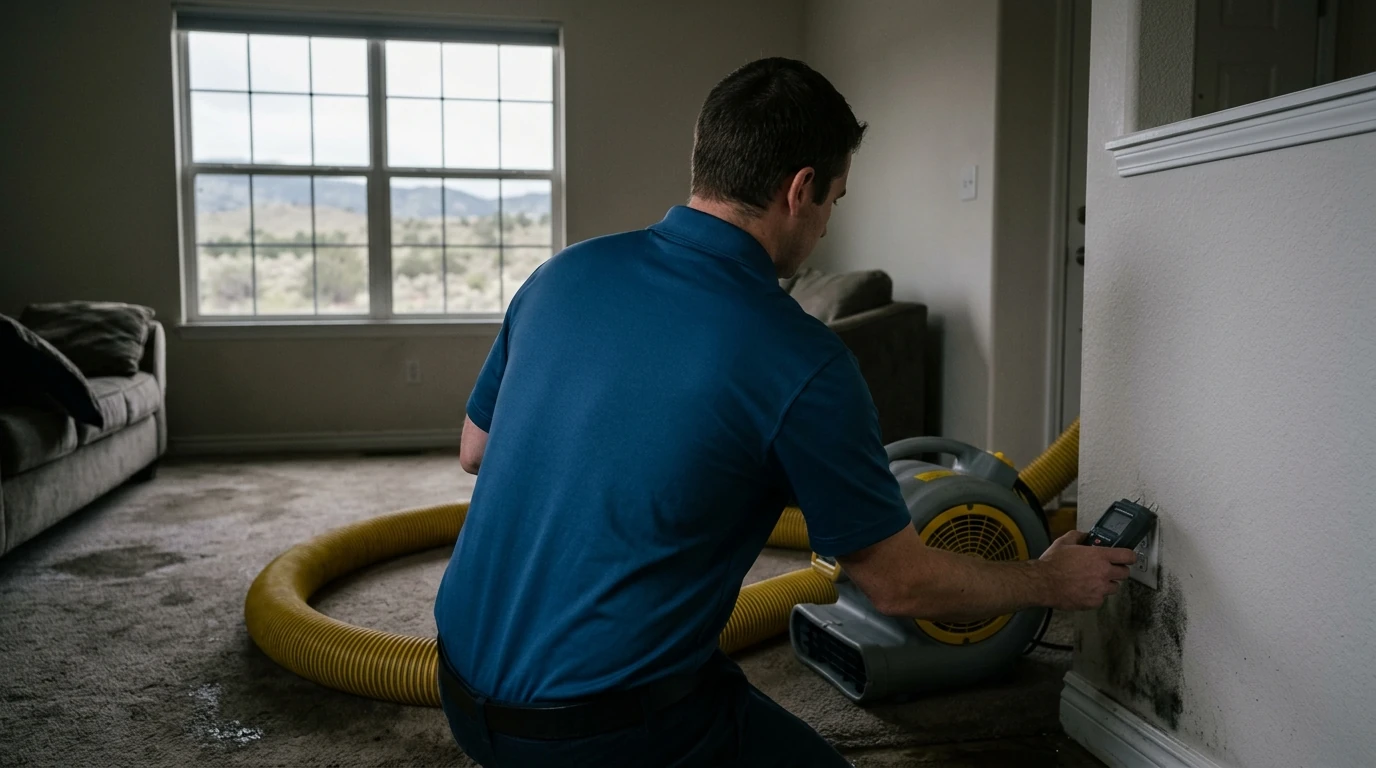
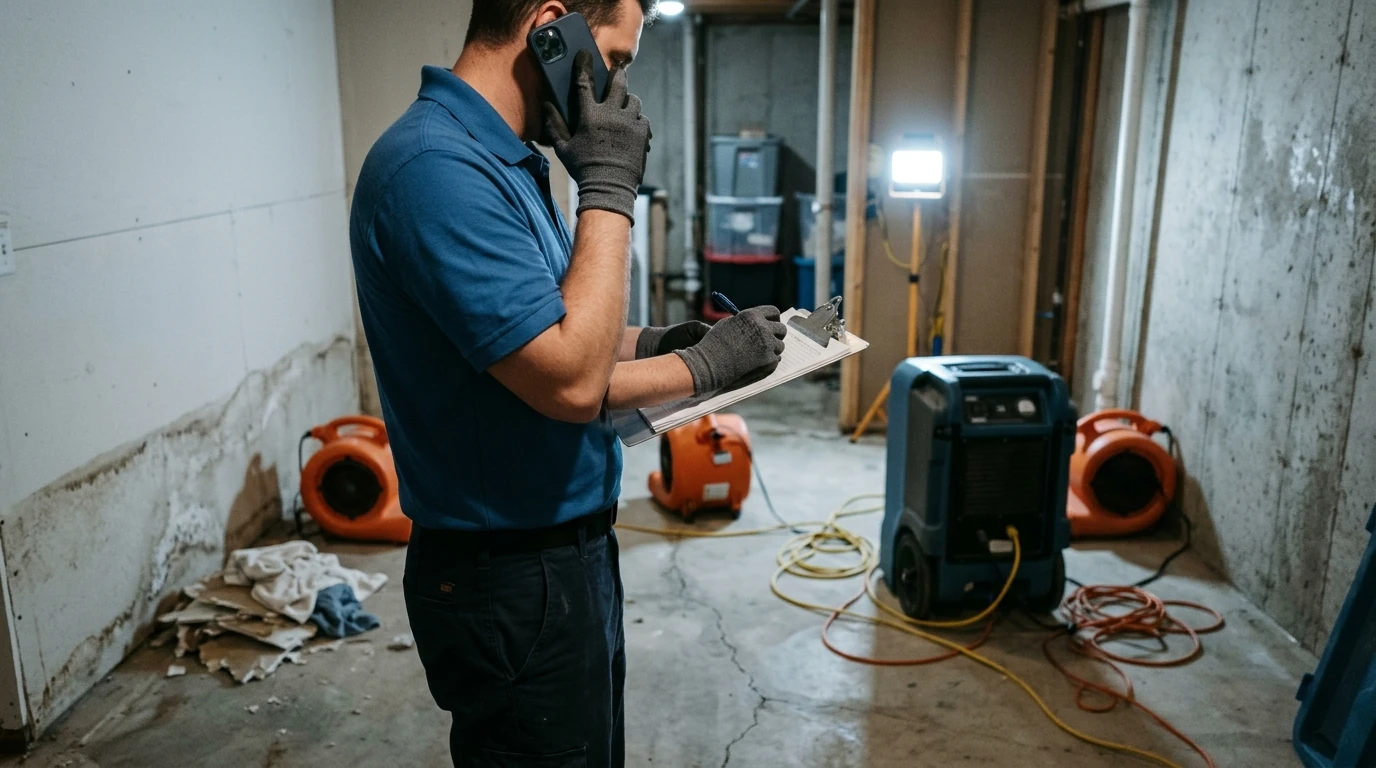
Once a crew arrives, the work generally follows the same sequence: extract standing water with truck-mounted or portable extractors, measure moisture in walls and flooring, set air movers and dehumidifiers to dry the structure, and photograph the damage for your insurance file as they go. For a step-by-step look at that sequence, see What To Do in the First 24 Hours After Water Damage.
Do You Call Your Insurance Company Before or After the Water Cleanup Crew?
Call the water cleanup crew first, then notify your insurance company once mitigation is underway. Most policies require you to limit further damage, and starting extraction promptly supports that requirement rather than working against it.
Most homeowners policies cover sudden, accidental water damage, like a pipe that bursts overnight, but they typically exclude gradual leaks, long-term seepage, and water backing up through a sewer or drain unless you carry a separate water backup endorsement. Keep your receipts and the crew’s documentation; that paper trail is what an adjuster reviews. For the full breakdown of what’s usually covered and what isn’t, see Does Homeowners Insurance Cover Water Damage? or the Insurance Information Institute’s guide to homeowners coverage.
What Should You Have Ready Before You Call?
Have the property address, the type of water involved, and whether the power is on in the affected room. If you know roughly how long the area has been wet, mention it, since that changes how urgent the drying timeline is.
If you already have an open insurance claim or a claim number, have that on hand too. It isn’t required to start the work, but it speeds up the paperwork once drying begins.
Water that’s been sitting for more than a few hours in a Colorado Springs basement, whether it’s near Garden of the Gods or out toward Fountain Creek, doesn’t wait for business hours to cause damage. Call SDU Catastrophe Response at (303) 656-9934 to get a crew started, or request a water cleanup assessment once the source is under control.