
TL;DR: Water heater flood cleanup in Colorado Springs typically costs $400 to $1,200 for a small leak caught early, and $3,000 to $9,000 or more for a full tank rupture that soaks a finished basement. The final number depends on how long the water sat, how much drywall, flooring, and insulation it reached, and whether the loss qualifies as sudden and accidental under your homeowners policy.
Maybe you came home to water pooled around the tank in your garage. Maybe you pulled back the carpet near a utility closet and found the subfloor soft and dark. Either way, you want a real number before you make a call, not a sales pitch. In Colorado Springs, where a lot of water heaters sit in a basement corner or an unfinished garage bay, a split tank can release 40 to 50 gallons in minutes, and that water finds the path of least resistance fast, under flooring, into baseboards, and up the drywall. Older homes around Old Colorado City and the Old North End, many still running plumbing original to earlier decades, tend to see more of the slow, gradual leaks as fittings and anode rods age; newer builds out toward Briargate more often deal with a sudden fitting or tank failure instead. Either scenario needs a different cleanup scope, and that’s what drives the price.
How Much Does Water Heater Flood Cleanup Cost in Colorado Springs?
Most jobs fall into one of two categories: a contained leak caught within a day or two, or a full tank failure that sits unnoticed and spreads. Here’s what each typically runs.
| Scenario | Typical Cost Range |
|---|---|
| Slow leak, caught early, single room, clean water | $400 - $1,200 |
| Slow leak behind drywall or under flooring, moisture spread to adjacent rooms | $1,500 - $3,500 |
| Garage tank failure, slab floor, minimal finish materials | $500 - $1,500 |
| Full tank rupture in a finished basement, water extracted same day | $3,000 - $7,500 |
| Tank failure with standing water 24+ hours, drywall and insulation removal required | $5,000 - $10,000+ |
| Flood damage reaching finished flooring that needs full replacement | $4,000 - $9,000 |
These are typical industry ranges for the Colorado Springs market, not a quote. Every loss is different, and a written scope after an in-person assessment is the only way to know your actual number.
What Pushes the Price Higher: Leak vs. Full Tank Failure
The single biggest cost driver is response time: water that’s extracted within hours costs far less to dry than water that sat overnight or longer. A slow leak that’s been dripping for weeks can actually cost more than a sudden rupture caught immediately, because it’s had time to wick into subfloor, baseplates, and insulation you can’t see from the surface.
Other factors that move the number:
- Category of water. A failed tank or supply line is usually Category 1 clean water at the moment of failure, but water that sits on porous materials for more than a day or two can degrade and require more aggressive drying or material removal.
- Square footage and materials affected. Carpet and pad usually need to come out; tile and concrete often dry in place. Drywall wicks water upward and is commonly cut 12-24 inches above the waterline.
- Where the tank sits. A garage failure on a bare slab is cheaper to clean than the same failure in a finished basement with carpet, drywall, and a drop ceiling.
- Code upgrades. If insulation or drywall has to come out anyway, some homeowners choose to add a drain pan or expansion tank while the wall is open, which adds cost but can prevent a repeat.
Does Homeowners Insurance Cover Water Heater Flood Damage?
Most standard homeowners policies cover sudden and accidental water heater failures, like a tank that splits or a supply line that suddenly fails, but they typically exclude damage from a leak that was gradual or went unaddressed for a long time. The distinction insurers look for is sudden versus gradual, and documentation at the time of loss matters.
If your tank failed suddenly, photograph the damage before anything is moved, note the time you discovered it, and get a written moisture reading from whoever does the mitigation. If the leak had clearly been going on for a while (stained subfloor, rusted fittings, a slow drip you’d noticed before), your adjuster may flag it as a maintenance issue rather than a covered loss. Review your specific policy language and talk to your agent. The Insurance Information Institute has a plain-language breakdown of what standard policies typically include.
For more on how this plays out locally, see our guide to homeowners insurance and water damage.
What Happens During Water Heater Flood Cleanup?
The process follows the same basic sequence regardless of job size, just at different scale.
- Water source stopped. The supply line to the tank is shut off (this is a plumbing task, not a restoration one, so a plumber usually handles the shutoff or repair itself).
- Standing water extracted. Truck-mounted or portable extraction removes visible water from floors and carpet.
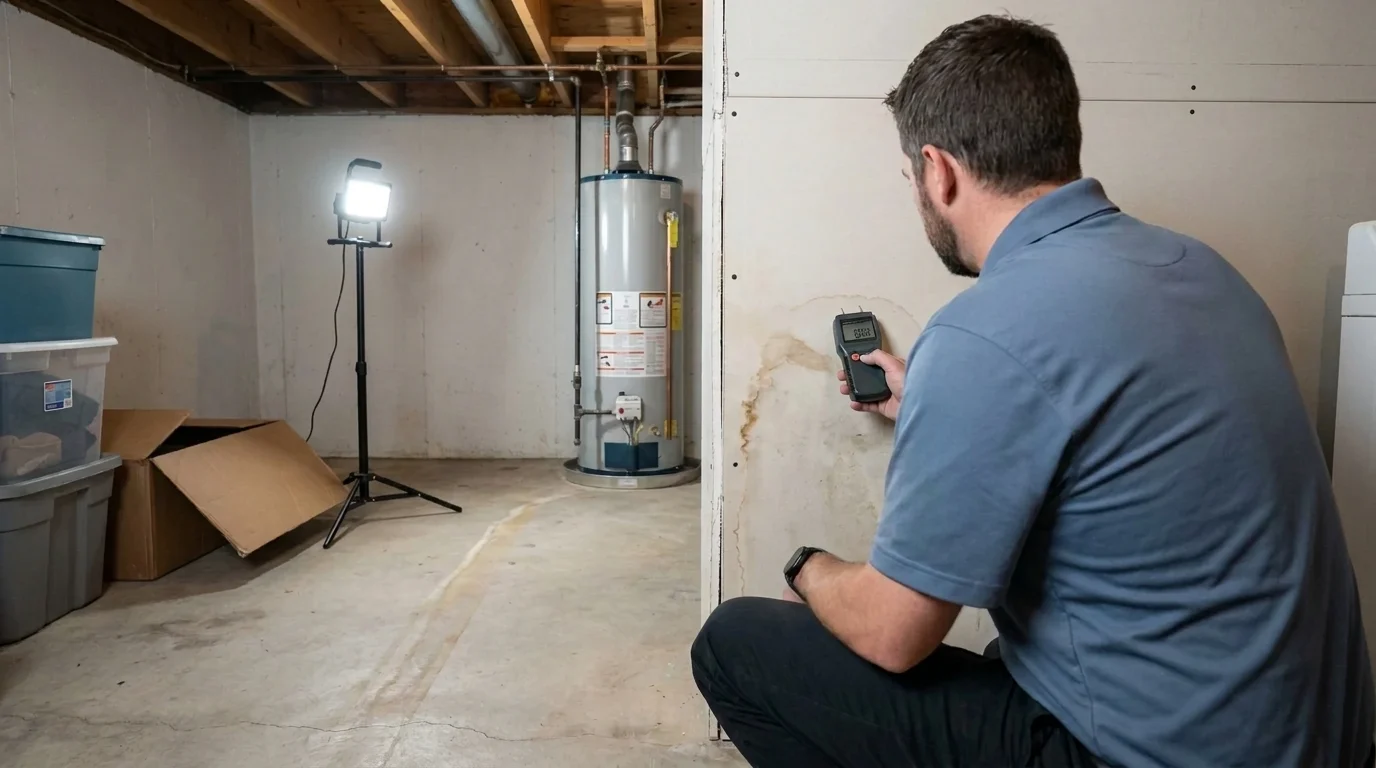
- Moisture mapped. A moisture meter checks drywall, subfloor, and baseboards to find how far the water traveled beyond what’s visible.
- Affected materials removed if needed. Wet insulation, saturated pad, and drywall beyond drying thresholds come out.
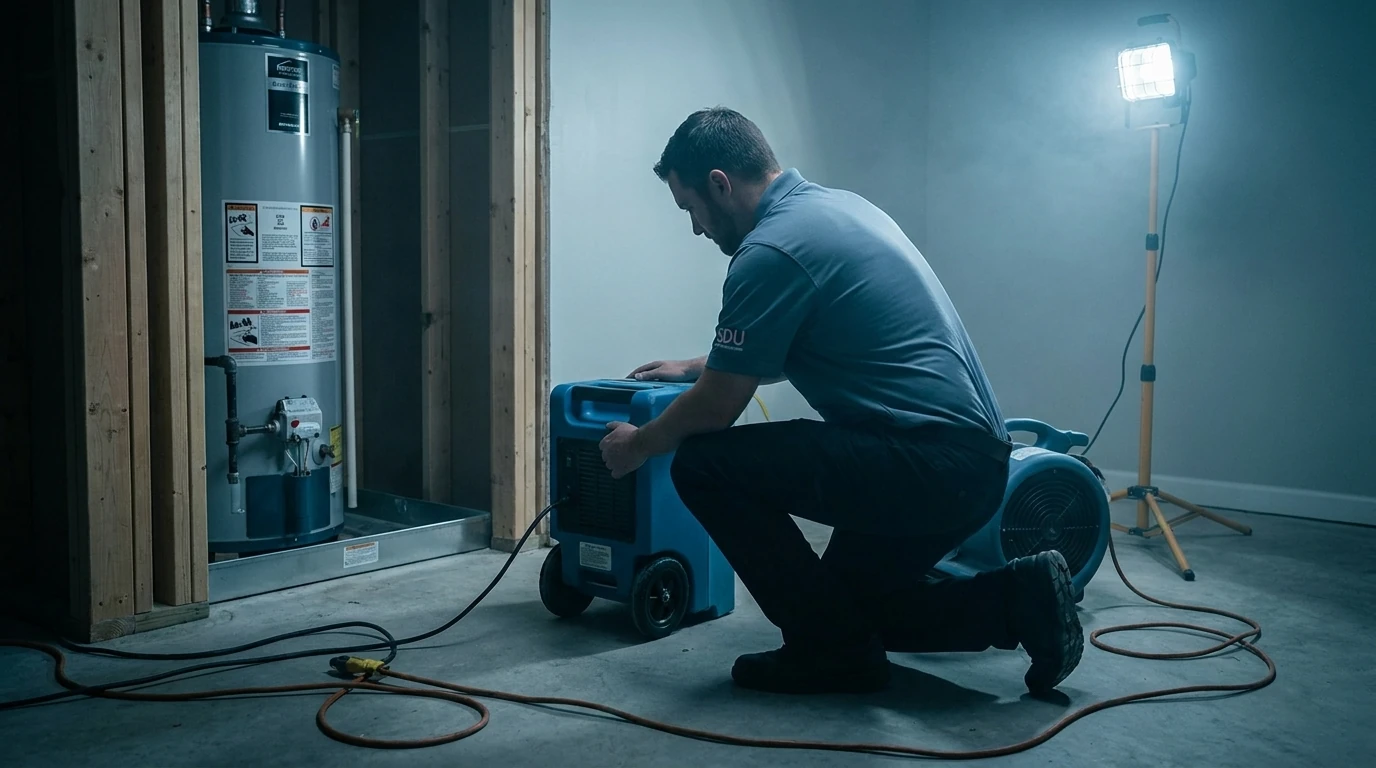
- Drying equipment placed. Air movers and a dehumidifier run for several days, with daily moisture checks until materials read dry per the IICRC S500 standard.
- Documentation delivered. Photos, moisture logs, and a scope of work go to you and your insurer.
That documentation step is often what separates a smooth claim from a denied one, which is why many Colorado Springs homeowners bring in SDU Catastrophe Response specifically to build the moisture logs and photo record an adjuster expects to see, rather than trying to document it themselves mid-crisis.
Should You Replace the Water Heater Before or After Cleanup?
The tank repair or replacement and the water damage cleanup are two separate jobs that typically run in parallel, not one after the other. A licensed plumber handles the tank itself (repair or replacement), while the drying and material removal happen on their own timeline so the space doesn’t sit wet longer than necessary.
Waiting to start drying until a new tank is installed only gives mold more time to establish, since the EPA notes mold can begin growing within 24 to 48 hours on wet materials. Get the water stopped and extraction started right away, and coordinate the tank replacement alongside it.
If you’re still in the window where the water is fresh, our burst pipe checklist covers the same first-hour priorities that apply to a water heater failure.
A written scope before work begins protects you either way: you’ll know what’s covered, what it costs, and what the plumber’s part is versus the drying and repair part.
About SDU Catastrophe Response
SDU Catastrophe Response is an IICRC Certified Firm serving Colorado Springs, CO and the surrounding Front Range communities, licensed and insured, with 24/7 emergency availability. Their technicians hold IICRC credentials in water restoration, structural drying, mold remediation, and fire and smoke restoration, and the company handles water cleanup, water damage restoration, storm damage, fire and smoke restoration, mold remediation, sewage cleanup, and related specialty services across the region.
Need help now? Call SDU Catastrophe Response at (303) 656-9934.