24/7 Emergency Storm Damage Restoration in Colorado Springs
24/7 emergency storm damage restoration in Colorado Springs and surrounding areas. IICRC-certified, insurance billing accepted. Call (303) 656-9934.
Storm damage in Colorado Springs doesn’t wait for business hours, and neither do we. We answer 24/7. Hail the size of golf balls punching through a roof deck, straight-line winds peeling back shingles, a cottonwood limb through the bedroom ceiling after a summer downburst: once the weather passes, the clock starts on secondary damage. Water finds every gap a storm opened up, and what looks like cosmetic damage on day one can mean saturated insulation and a compromised roof deck by day three. Call now for emergency service before the next rain system moves through the Front Range.
What Storm Damage Restoration actually involves
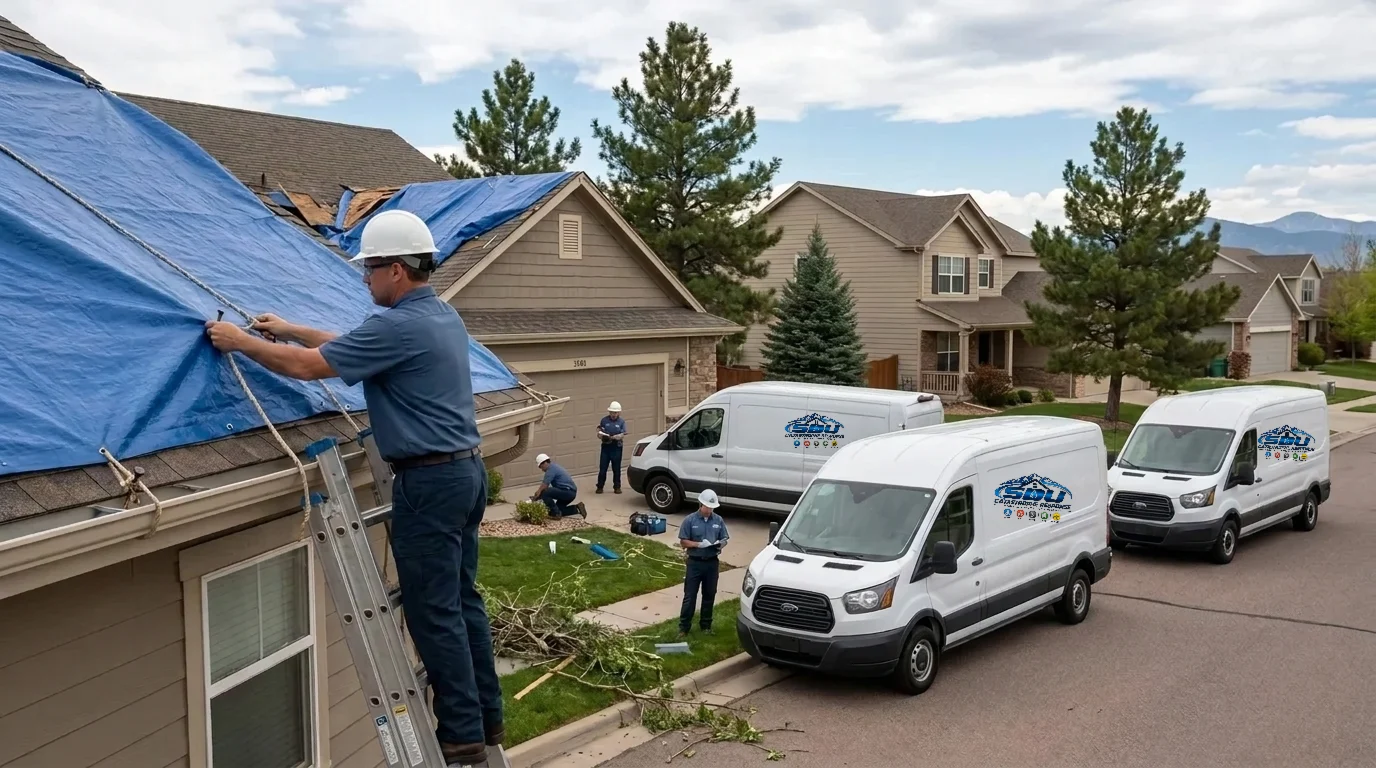
Storm damage restoration covers the structural and water-intrusion side of severe weather events: wind-damaged roofing, hail-fractured shingles and siding, tree limb impacts, and the water that gets in through all three. It is different from a routine roof leak because storm losses are often multi-point: a single hailstorm can compromise flashing in six places at once, and wind-driven rain pushes water sideways under siding and through window trim in ways gravity-fed leaks never do. Crews document every affected elevation of the structure, tarp or board up open sections to stop ongoing intrusion, and extract any water that has already reached subfloors, drywall, or insulation. Depending on the scope, equipment ranges from heavy-duty tarping systems and plywood board-up materials to extraction units and industrial air movers for the water that already got inside. A tree-through-roof scenario and a hail-only roof event call for very different first moves, which is why the initial inspection drives everything that follows.
Our process
- Safety and stabilization survey. Before anyone touches debris, the crew checks for compromised framing, exposed electrical, and unstable tree limbs or structural sections that pose a fall risk.
- Emergency tarp and board-up. Open roof sections, broken windows, and breached siding get covered immediately to stop further wind and rain intrusion, this is the step that limits how much the loss grows overnight.
- Water extraction and drying, where applicable. If rain or flood water has already entered the structure, standing water is pulled and affected materials are dried per IICRC S500 standards before anything gets closed back up.
- Debris removal and damage mapping. Downed limbs, displaced shingles, and damaged siding are cleared and photographed by elevation, building the documentation an adjuster will need.
- Scope of repair and handoff. A written scope outlines what needs replacing versus what can be dried and saved, setting up the reconstruction phase or informing the claim.
What separates a good storm damage response from a bad one
The most common mistake in storm cleanup is treating it like a single event instead of a moving target. A crew that tarps a roof and leaves without checking the attic for wind-driven water often misses saturated insulation that starts growing mold within 24 to 48 hours. Hail damage is also frequently under-scoped: granule loss and fractured mat on a shingle roof isn’t always visible from the ground, and insurance adjusters specifically look for bruising patterns and soft spots that confirm impact versus normal wear. Good storm response also means documenting damage by compass direction, since wind-driven hail and straight-line winds rarely hit a roof or wall evenly, an adjuster expects to see which elevations took the brunt of it. Skipping that documentation is one of the most common reasons storm claims get underpaid.
What does Storm Damage Restoration cost?
Storm damage costs vary more than almost any other restoration category because a single event can range from a few displaced shingles to a tree through the roof with interior water damage. Every loss gets a written scope from SDU Catastrophe Response before work begins, since the right number depends on what the inspection finds, not a flat rate. Most homeowners insurance policies cover sudden storm events like hail, wind, and tree impact, though coverage for resulting water damage and the deductible amount depend on the specific policy.
| Scenario | Typical range |
|---|---|
| Emergency tarp, single roof section | $400 - $1,200 |
| Board-up, broken windows or siding | $300 - $900 per opening |
| Tree removal and roof patch | $1,500 - $5,000 |
| Hail-damaged roof, full tear-off and replace | $8,000 - $18,000 |
| Wind-driven water intrusion with interior drying | $2,500 - $7,500 |
| Large loss, multi-point structural and water damage | $20,000+ |
Seasonal & regional considerations
Colorado Springs sits in a corridor that sees some of the most frequent and intense hailstorms in the country, typically clustered between May and August when afternoon thunderstorms build over the Front Range. Straight-line winds and downburst activity often accompany these same storm cells, which is why roof and tree damage so often show up together. Winter brings a different risk: heavy, wet spring snow can load damaged roof sections that didn’t get fully repaired after summer storms, turning a cosmetic hail issue into a collapse risk months later.
Service area
SDU Catastrophe Response responds to storm damage throughout Colorado Springs and the surrounding Front Range communities, including Monument, Fountain, Woodland Park, and Falcon.
If a storm has already moved through and you’re looking at a damaged roof, a downed limb, or water coming in somewhere it shouldn’t, get a tarp or board-up crew on site before the next weather system arrives. Call (303) 656-9934 to start emergency storm damage mitigation now.
Services We Handle
- Emergency Board Up
- Emergency Tarping
Frequently Asked Questions
Does homeowners insurance cover storm damage restoration?
How quickly does a damaged roof need to be tarped after a storm?
How do you tell the difference between hail damage and normal roof wear?
What happens if a tree falls on my house during a storm?
Can wind-driven rain cause water damage even without a roof breach?
Looking for the best storm damage restoration company in Colorado Springs?
SDU Catastrophe Response provides storm damage restoration in Colorado Springs, CO and the surrounding area. We answer calls 24/7 — call (303) 656-9934 for immediate help.
Need Storm Damage Restoration now?
We respond 24/7 across Colorado Springs and surrounding CO cities.