24/7 Emergency Sewage Cleanup and Sanitization in Colorado Springs
24/7 emergency sewage cleanup and sanitization in Colorado Springs and surrounding areas. IICRC-certified, insurance billing accepted. Call (303) 656-9934.
Raw sewage in your home or business in Colorado Springs? Call (303) 656-9934 now. We answer 24/7 and treat every sewage backup as the health hazard it is, not just a cleanup job.
A sewer line backup or septic overflow isn’t the same problem as a clean water leak. Sewage carries bacteria, viruses, and parasites that start contaminating porous materials, carpet pad, drywall, subfloor, the moment they make contact. Left even a few hours, the smell deepens, contamination wicks further into building materials, and what started as a contained backup becomes a full-depth demolition job. If you’re smelling sewage odor from a drain, seeing backflow in a basement floor drain or tub, or dealing with a septic system that’s surfaced in the yard, the clock matters more than it does with almost any other water event in the house.
What Sewage Cleanup and Sanitization actually involves
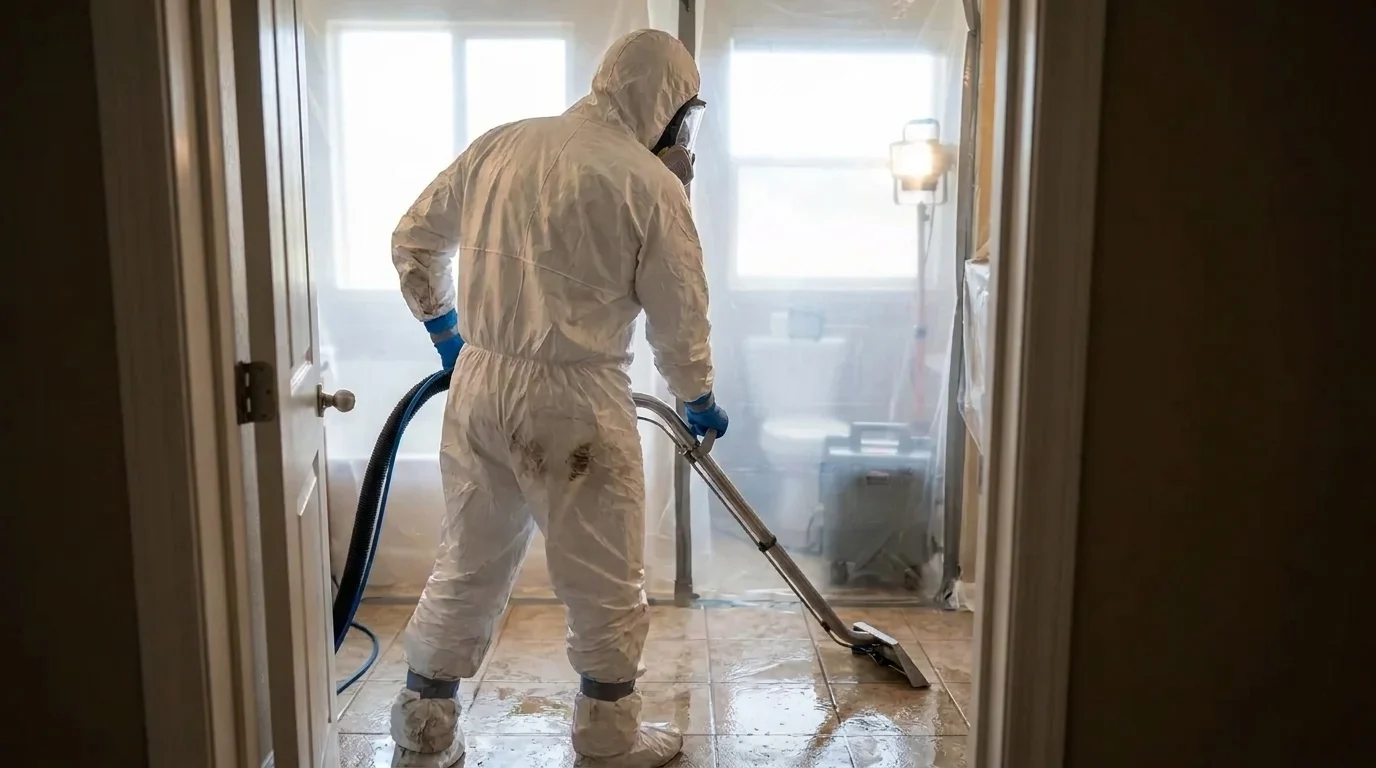
Sewage cleanup and sanitization starts with identifying the category of contamination, classified under the IICRC S500 water damage standard as Category 3 (black water) in nearly every case involving sewer backup or septic overflow. That classification drives everything else: what can be cleaned and saved versus what has to be removed and discarded, what PPE the crew wears, and what containment is set up before any equipment runs. Affected porous materials like carpet, pad, and often drywall and baseboard are typically removed rather than dried in place, because Category 3 water cannot be reliably sanitized once it’s been absorbed into those materials. Non-porous surfaces (tile, sealed concrete, some hardwood depending on finish and exposure time) can often be cleaned, disinfected, and retained. Extraction equipment pulls standing sewage first, followed by antimicrobial application, then structural drying of what remains using the same air movers and dehumidifiers used in any water loss, monitored daily until moisture readings return to normal.
Our process
- Contamination assessment and containment. We identify the source (sewer line, septic system, or fixture backup), confirm the water category, and set up containment to stop cross-contamination into unaffected rooms.
- Raw sewage removal and extraction. Standing sewage and saturated debris are removed first using pumps and extraction equipment rated for contaminated water, not standard wet-vacs.
- Removal of unsalvageable materials. Carpet, pad, and other porous materials that absorbed Category 3 water are removed and bagged for disposal; we document everything before removal for your claim.
- Cleaning, disinfection, and sanitization. Remaining surfaces are cleaned and treated with EPA-registered antimicrobials, then the space is deodorized to address the sewage odor that lingers in subfloor and framing even after visible cleanup.
- Structural drying and verification. Air movers and dehumidifiers run until moisture content in affected framing and subfloor returns to a dry standard, confirmed with moisture meters rather than a visual check.
What separates a good sewage cleanup response from a bad one
The most common mistake we see is treating a sewage backup like a regular water loss: drying materials in place that should have been removed, or skipping antimicrobial treatment because the water “looked” like it drained away. Category 3 water doesn’t need to look dirty to be contaminated, and surface-level cleaning without proper disinfection leaves bacteria in wall cavities and subfloor that resurface as odor and health complaints weeks later. Adjusters reviewing a sewage claim typically want documented moisture readings, photos of removed materials before and after, and a clear record of what was disinfected versus discarded, not just a invoice for “cleanup.” A thorough response also checks whether the backup originated from a municipal sewer line issue versus a failure on the homeowner’s own lateral line, since that distinction can affect what your policy or the utility covers.
What does Sewage Cleanup and Sanitization cost?
Costs vary widely depending on how much standing sewage was involved, how many rooms were affected, and whether materials like carpet, drywall, or cabinetry need to be removed. Every loss gets a written scope before work begins so you know exactly what’s being done and why. Many homeowners insurance policies cover sudden sewer backups, though coverage often depends on whether you carry a sewer backup rider, so it’s worth checking your policy or letting us help document the loss for your adjuster.
| Scenario | Typical range |
|---|---|
| Single bathroom, minor backup | $800 - $2,500 |
| Basement floor drain backup, one room | $2,000 - $5,500 |
| Septic overflow, multiple rooms | $4,000 - $9,000 |
| Whole-basement sewage contamination | $7,000 - $15,000+ |
| Sanitization only, no material removal | $500 - $1,500 |
Seasonal & regional considerations
Colorado Springs sees a mix of older sewer infrastructure in established neighborhoods and private septic systems in surrounding unincorporated areas, both of which are prone to backups during heavy spring runoff or sudden summer thunderstorms when storm surges overwhelm aging lines. Freeze-thaw cycles through the winter can also shift and crack older sewer laterals, setting up backups that show up months later during a thaw. If your property relies on a septic system, overflow risk tends to climb during unusually wet stretches when the leach field can’t absorb water as fast as the tank fills.
Service area
We respond to sewage backups and septic overflows throughout Colorado Springs and the surrounding communities, including Monument, Fountain, Security-Widefield, and the broader El Paso County area.
If sewage has backed up into your home or business, don’t wait for the smell to tell you how bad it’s gotten. Call (303) 656-9934 to begin sewage cleanup and sanitization before contamination spreads further into your building’s structure.
Frequently Asked Questions
Does homeowners insurance cover sewage cleanup and sanitization?
Is raw sewage always considered Category 3 water damage?
Can carpet exposed to sewage backup be saved?
How do you get rid of sewage odor after cleanup?
What should I do while waiting for a sewage cleanup crew to arrive?
Looking for the best sewage cleanup and sanitization company in Colorado Springs?
SDU Catastrophe Response provides sewage cleanup and sanitization in Colorado Springs, CO and the surrounding area. We answer calls 24/7 — call (303) 656-9934 for immediate help.
Need Sewage Cleanup and Sanitization now?
We respond 24/7 across Colorado Springs and surrounding CO cities.