24/7 Emergency Ceiling Water Damage Repair in Colorado Springs
24/7 emergency ceiling water damage repair in Colorado Springs and surrounding areas. IICRC-certified, insurance billing accepted. Call (303) 656-9934.
Water coming through the ceiling in Colorado Springs? We answer 24/7. Call now and our crew heads out to stop the leak damage and start drying.
A water stain spreading across drywall or paint bubbling along a ceiling seam is never just cosmetic. By the time that stain is visible, water has usually already saturated the insulation, drywall paper facing, and in many cases the framing above it. Left alone, a damp ceiling can sag, crack, or collapse under its own weight, and the cavity behind it becomes a mold risk within 24 to 48 hours. SDU Catastrophe Response diagnoses the source, dries the structure, and repairs the ceiling so the room is safe and the surface matches what was there before.
What Ceiling Water Damage Repair actually involves
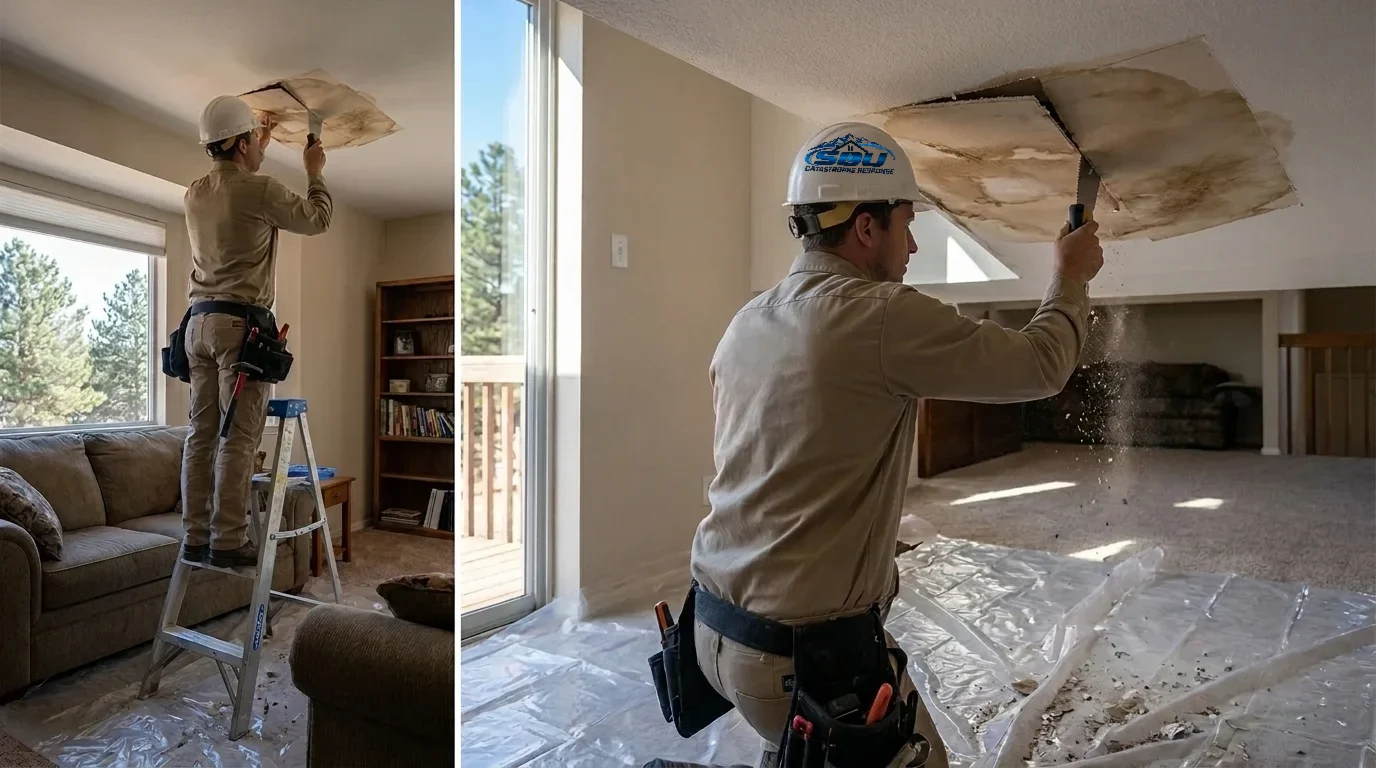
Ceiling leaks come from a handful of sources: a failed roof flashing, an upstairs bathroom supply line or wax ring, an HVAC condensate line, or a burst pipe running through a joist bay. Each source behaves differently. A slow roof leak during a spring snowmelt might only show a faint yellow-brown ring, while a burst supply line can soak an entire ceiling section in minutes and bring drywall down that same day. Our crews use moisture meters and thermal imaging to trace how far water has traveled laterally along joists and trusses, because the visible stain rarely marks the full extent of the damage. Once the source is confirmed and stopped (coordinating with a plumber or roofer when the leak isn’t part of our scope), we remove saturated drywall, insulation, and any compromised framing, then set air movers and dehumidifiers to dry the cavity before any new material goes up. Depending on how much of the ceiling is affected and whether paint, texture, or trim needs matching, repair can run from a single-day patch to a multi-day job with texture blending and repainting.
Our process
- Source confirmation and moisture mapping. We trace the leak path with moisture meters and thermal imaging to find out how far water traveled behind the ceiling, not just where it’s visibly stained.
- Containment and controlled demolition. Saturated drywall, insulation, and any soft or swollen framing members are removed in a contained work area to limit dust and debris in the living space below.
- Structural drying. Air movers and dehumidifiers are set to dry joists, subfloor above (if applicable), and any remaining framing per IICRC S500 drying standards, with moisture readings logged until materials reach dry standard.
- Framing and drywall rebuild. Damaged joists or blocking are sistered or replaced as needed, new drywall is hung, taped, and finished to match existing texture.
- Paint and final match. Ceiling is primed and painted to blend with the surrounding surface, and the area is inspected for any remaining moisture before we close out the job.
What separates a good ceiling water damage response from a bad one
The most common mistake is patching the visible stain without checking how far the water actually spread. Water follows the slope of a joist or truss, so a leak over a hallway can show up staining a bedroom ceiling ten feet away, and if that hidden run isn’t dried, mold can start growing inside a closed cavity nobody opens again until a sale inspection. A second mistake is skipping moisture documentation entirely: insurance adjusters want logged readings showing materials reached dry standard before drywall went back up, not just a photo of a painted ceiling. We also watch for sagging that indicates the drywall has absorbed enough water to lose structural integrity. A ceiling that looks intact but feels spongy or shows nail pops along the seams should be opened and inspected rather than painted over, because trapped moisture behind an intact-looking surface is exactly the condition that breeds hidden mold.
What does Ceiling Water Damage Repair cost?
Costs vary with how much of the ceiling is affected, whether framing needs replacement, and how complex the texture or paint match is. Every loss is different, which is why SDU Catastrophe Response provides a written scope of work before any repair begins. Homeowners insurance typically covers ceiling water damage when the cause is sudden and accidental, like a burst pipe, though gradual leaks or deferred roof maintenance are often excluded, so it’s worth checking your specific policy language.
| Scenario | Typical range |
|---|---|
| Small stain, no structural damage, spot repair | $300 - $800 |
| Single room ceiling section, drywall replacement | $800 - $2,500 |
| Full ceiling replacement with insulation | $2,000 - $5,000 |
| Repair involving joist or truss replacement | $3,500 - $8,000 |
| Multi-room ceiling damage with texture/paint match | $5,000 - $12,000+ |
Seasonal & regional considerations
Colorado Springs sees wide temperature swings and heavy spring snow loads, and ice damming along roof edges is a common source of ceiling leaks in older homes with shallow roof pitches. Freeze-thaw cycles can also stress attic plumbing and HVAC condensate lines, so a ceiling stain that appears after a warm spell following a hard freeze is often a thawing pipe rather than a roof issue. Homes built before the 1980s in neighborhoods with original cast iron or galvanized plumbing are also more prone to slow pinhole leaks that show up first as a ceiling stain below a bathroom.
Service area
We repair ceiling water damage throughout Colorado Springs and the surrounding Front Range communities, including Monument, Fountain, and Woodland Park, where similar housing stock and weather patterns produce the same roof and plumbing-driven ceiling leaks.
If water is actively coming through your ceiling or you’ve spotted a new stain, call (303) 656-9934 to schedule a moisture assessment before the damage spreads further into the structure.
Frequently Asked Questions
Does homeowners insurance cover ceiling water damage repair?
How do I know if a ceiling stain means the drywall needs to be replaced or can just be repainted?
Why does a ceiling leak sometimes show up in a different room than where the water source is?
How long does a ceiling cavity need to dry before new drywall goes up?
Is a sagging ceiling an emergency, or can it wait a few days?
Looking for the best ceiling water damage repair company in Colorado Springs?
SDU Catastrophe Response provides ceiling water damage repair in Colorado Springs, CO and the surrounding area. We answer calls 24/7 — call (303) 656-9934 for immediate help.
Need Ceiling Water Damage Repair now?
We respond 24/7 across Colorado Springs and surrounding CO cities.