24/7 Emergency Burst Pipe Cleanup and Repair in Colorado Springs
24/7 emergency burst pipe cleanup and repair in Colorado Springs and surrounding areas. IICRC-certified, insurance billing accepted. Call (303) 656-9934.
Water spraying from a wall or ceiling after a pipe lets go moves fast. A supply line failure can release over 10 gallons a minute, and in a Colorado Springs basement or crawlspace that water finds drywall, subfloor, and insulation before anyone notices. We answer 24/7 for burst pipe emergencies, because the gap between pipe break and water shutoff is where most of the real damage happens.
What Burst Pipe Cleanup and Repair actually involves
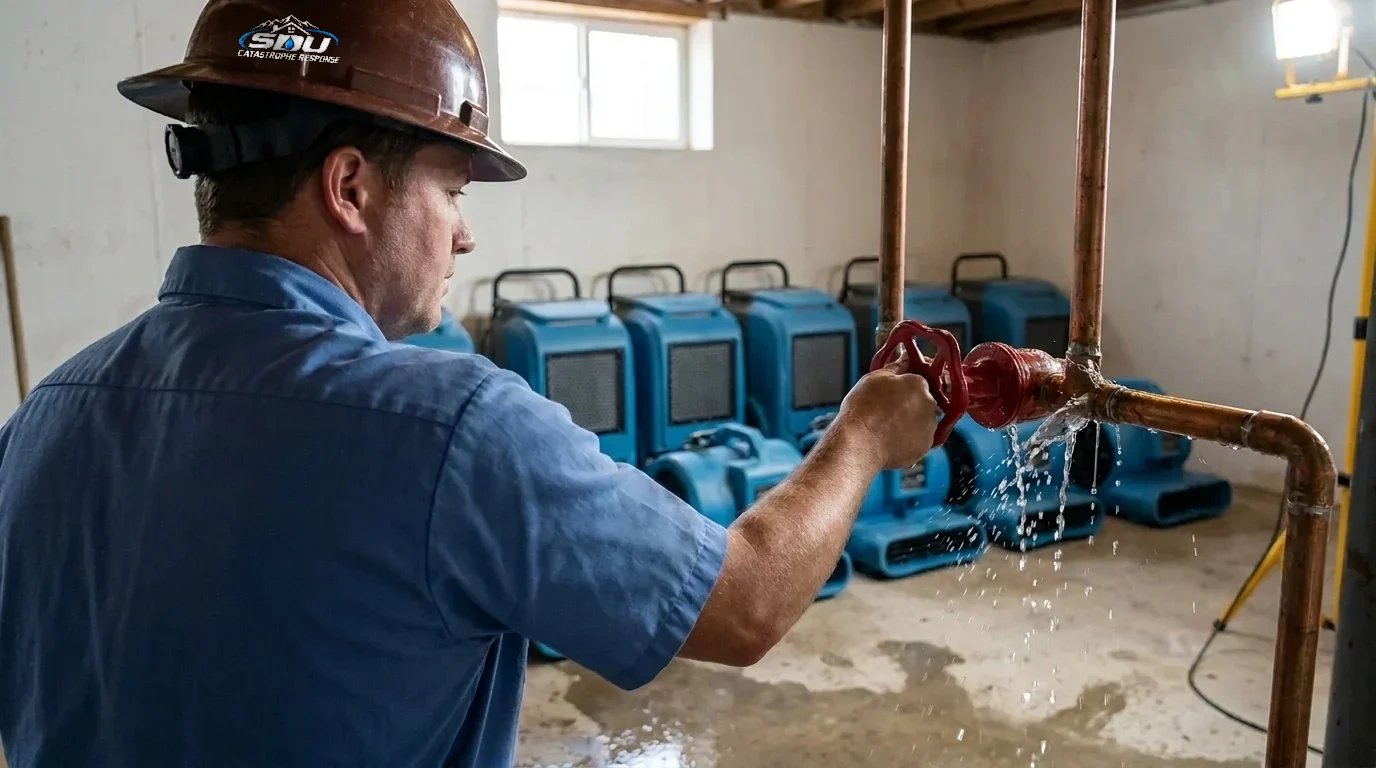
A burst pipe event is really two problems stacked on top of each other: the water damage itself, and the question of what caused the line to fail. Our role covers the water side end to end, locating the source alongside your plumber or helping you flag the shutoff, extracting standing water, pulling back saturated flooring and drywall where needed, and drying the structure with commercial air movers and dehumidifiers set to pull moisture out of framing, subfloor, and wall cavities, not just the visible surface. Copper pipes that split from freeze expansion, galvanized lines that corrode and rupture, and PEX fittings that pop under pressure all behave differently once water is loose in a wall, and we treat each one on its own terms rather than running one generic drying plan. Where we handle the structural side, cutting out and replacing affected drywall, baseboards, or flooring, that work falls under our reconstruction services so the repair is documented and matched to the original materials.
Our process
- Source confirmation and water shutoff check. We verify the main or zone valve is off before any equipment goes in, and coordinate with your plumber if the break itself still needs repair.
- Extraction and material assessment. Standing water comes out first with truck-mount or portable extractors, then we check drywall, baseboard, subfloor, and insulation to see what’s saturated versus what’s salvageable.
- Controlled demolition where needed. Water-logged drywall and insulation that won’t dry in place get removed in sections, not wholesale, to limit what has to be rebuilt later.
- Structural drying and moisture monitoring. Air movers, dehumidifiers, and daily moisture readings on framing and subfloor track the dry-out against IICRC S500 guidelines until materials read at normal moisture content, not just dry to the touch.
- Repair scope and rebuild. Once the structure is confirmed dry, we provide a written scope for drywall, flooring, or trim replacement under our reconstruction services.
What separates a good burst pipe response from a bad one
The most common mistake is drying the surface and calling it done. Drywall can feel dry within a day while the stud cavity behind it, or the subfloor underneath, stays wet for a week or more, and that’s exactly the gap where hidden mold and soft framing start. A second mistake is skipping moisture mapping entirely, pulling equipment on a schedule instead of on readings, which means jobs either get cut short or run longer than necessary. Insurance adjusters reviewing a burst pipe claim typically look for documented moisture readings at the start and end of drying, photos of the affected cavity before it’s closed back up, and a clear line between what was removed and why. A response that skips that documentation tends to generate disputes later, especially if secondary damage shows up after the wall is closed.
What does Burst Pipe Cleanup and Repair cost?
Costs vary with how much water escaped before shutoff, how far it traveled inside walls and under flooring, and whether drywall or flooring needs to come out. Every loss is different, which is why we provide a written scope before any work begins rather than a flat quote over the phone. Homeowners insurance typically covers sudden and accidental pipe bursts, though coverage can differ if the cause is linked to long-term neglect or a known plumbing issue.
| Scenario | Typical range |
|---|---|
| Small leak, contained to one area, no drywall removal | $800 - $2,000 |
| Burst pipe with wall cavity saturation, drywall removed | $2,500 - $6,000 |
| Multi-room water travel with flooring and baseboard replacement | $6,000 - $12,000 |
| Extended undetected leak with subfloor or framing damage | $10,000 - $20,000+ |
Seasonal & regional considerations
Colorado Springs sees sharp overnight temperature drops, and homes with exterior walls, crawlspaces, or unheated garages are where copper and older galvanized lines are most likely to freeze and split. Pipe burst calls cluster around hard freeze periods and the first warm thaw after one, when a cracked line finally lets go under full water pressure. Homes built before PEX became standard are worth a periodic look at exposed or poorly insulated lines before winter sets in.
Service area
We respond to burst pipe emergencies throughout Colorado Springs and surrounding communities including Monument, Fountain, Woodland Park, and the broader Pikes Peak region.
If water is actively coming from a wall or ceiling, shut off the water if you can reach the valve safely and call (303) 656-9934. Our team can walk you through next steps on the phone and get a crew moving toward containment and extraction.
Frequently Asked Questions
Does homeowners insurance cover burst pipe cleanup and repair?
How do I know if a pipe burst behind a wall versus just a visible leak?
Why does drywall need to come out instead of just drying in place?
What's the difference between a frozen pipe burst and a fitting failure?
How long does drying take after a burst pipe?
Looking for the best burst pipe cleanup and repair company in Colorado Springs?
SDU Catastrophe Response provides burst pipe cleanup and repair in Colorado Springs, CO and the surrounding area. We answer calls 24/7 — call (303) 656-9934 for immediate help.
Need Burst Pipe Cleanup and Repair now?
We respond 24/7 across Colorado Springs and surrounding CO cities.