24/7 Emergency Basement Flooding Cleanup in Colorado Springs
24/7 emergency basement flooding cleanup in Colorado Springs and surrounding areas. IICRC-certified, insurance billing accepted. Call (303) 656-9934.
Basement flooding in Colorado Springs? Call (303) 656-9934 now. We answer 24/7, and the sooner extraction starts, the less chance the water has to migrate into wall cavities, insulation, and the subfloor above.
Basement flooding rarely announces itself the way a burst pipe does. More often it’s a slow seep along the foundation wall after a spring thaw, a sump pump that failed during a storm, or water backing up through a floor drain during heavy rain. By the time carpet feels damp or you notice a musty smell near the stairs, water has usually been sitting against the slab and framing for hours, sometimes longer. Below-grade spaces hold moisture differently than the rest of the house, and treating them like any other wet room is one of the most common mistakes homeowners and inexperienced crews make.
What Basement Flooding Cleanup actually involves
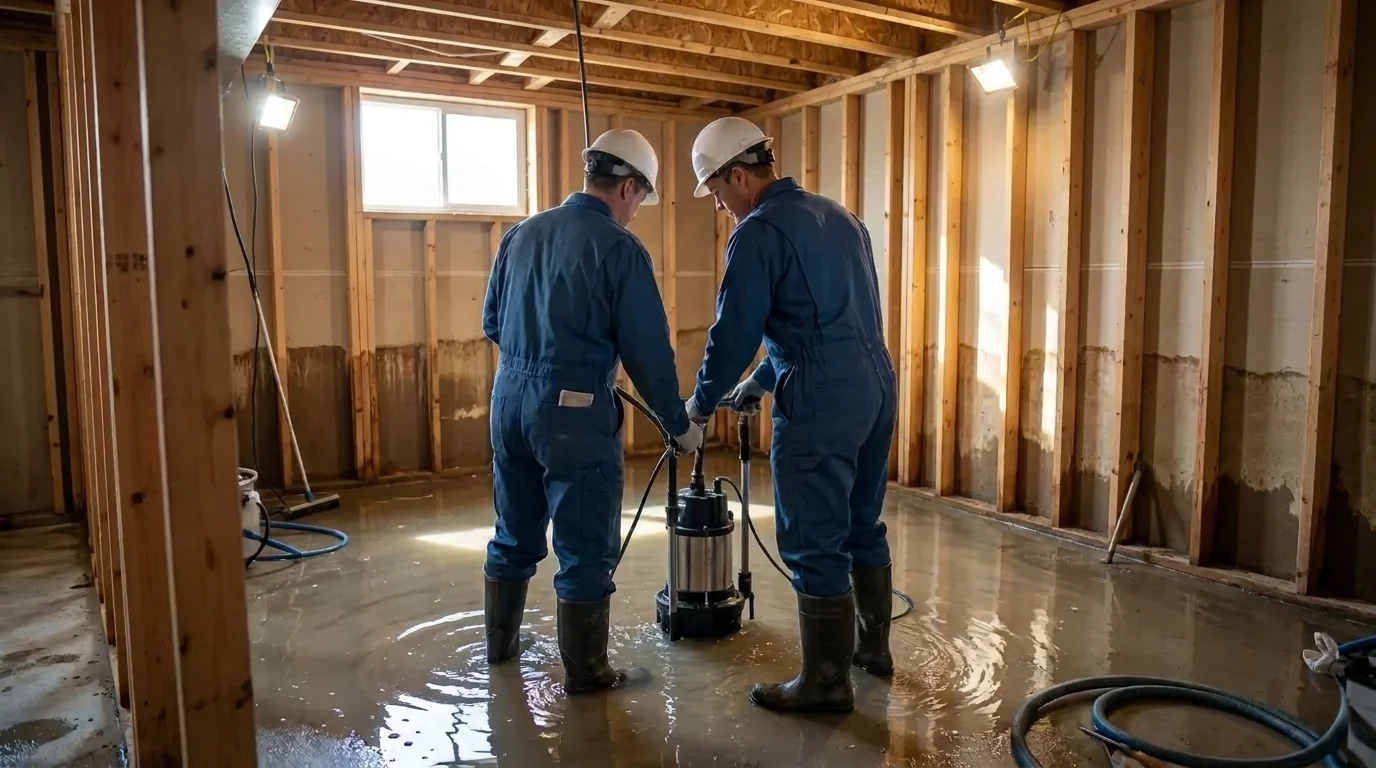
A flooded basement is its own category of water loss because of what surrounds it: concrete slab, block or poured foundation walls, often a sump system, and frequently finished materials like drywall, carpet pad, and framed-in storage. Standing water gets pumped and extracted first, then the real work starts, measuring how far moisture has traveled into porous materials that look dry on the surface. Concrete holds water longer than people expect, and block foundation walls can wick moisture upward for days after the visible water is gone. Equipment typically includes submersible pumps for standing water, low-profile air movers positioned along baseboards and wall cavities, and commercial dehumidifiers sized for the cubic footage and the higher ambient humidity common in below-grade rooms. Drying a basement properly usually takes longer than drying an above-grade room with the same square footage, simply because of how much concrete and block is involved.
Our process
- Source and standing water assessment. Before anything else, we identify where the water came from, groundwater intrusion, sump failure, surface runoff, or plumbing, because that determines both the water category and whether the source needs to be addressed before drying starts.
- Extraction. Submersible pumps and truck-mounted extraction remove standing water from the slab, including water trapped under carpet pad or behind baseboards.
- Moisture mapping. We use moisture meters on the slab, foundation walls, and any framed or finished surfaces to map exactly how far the water traveled, this is what determines which materials can be dried in place and which need to come out.
- Structural drying and monitoring. Air movers and dehumidifiers are placed and adjusted based on daily moisture readings, not a fixed schedule, because concrete and block dry at a different rate than drywall or wood framing.
- Removal of non-salvageable materials. Wet drywall below the flood line, saturated insulation, and ruined carpet pad are removed when drying in place isn’t realistic, which protects the rest of the structure from prolonged moisture exposure.
What separates a good basement flooding response from a bad one
The most common shortcut is drying the visible surfaces and calling the job done without checking what’s happening inside the wall cavity or under the slab-adjacent flooring. Drywall can read dry on a surface moisture test while the insulation behind it stays saturated for weeks, which is exactly the setup that leads to a mold callback later. A thorough response documents moisture readings at multiple points over several days, not just on day one, and adjusts drying equipment based on those readings instead of pulling equipment on a fixed timeline. Insurance adjusters reviewing a basement flood claim typically look for dated moisture logs, photos of the water line and affected materials before removal, and a clear explanation of why specific materials were removed rather than dried in place. Basement flooding also raises a question above-grade losses don’t: was this water category 1 (clean groundwater or sump overflow) or category 2/3 (backed-up drainage)? That classification affects what materials are safe to dry versus what needs to be removed, and it needs to be documented, not assumed.
What does Basement Flooding Cleanup cost?
Costs vary with how much of the basement was affected, how long the water sat before cleanup started, and whether the space was finished or unfinished. These are typical industry ranges, not a quote, every basement flood is scoped individually and SDU Catastrophe Response provides a written scope before any work begins. Most homeowners insurance policies cover basement flooding caused by a sudden plumbing failure or sump pump malfunction, but groundwater and surface flooding are often excluded unless the policy includes specific flood coverage, so it’s worth checking your policy language early.
| Scenario | Typical range |
|---|---|
| Unfinished basement, clean water, small area | $1,500 - $4,000 |
| Finished basement, clean water, moderate area | $4,000 - $9,000 |
| Flooding involving contaminated or backed-up water | $6,000 - $15,000+ |
| Drywall, insulation, and framing removal required | $5,000 - $12,000 |
| Hardwood, laminate, or specialty basement flooring | $7,000 - $16,000 |
Seasonal & regional considerations
Colorado Springs sees two basement-flooding patterns tied to the local climate. Spring snowmelt and sudden freeze-thaw swings can push groundwater against foundation walls faster than older sump systems were designed to handle, and the region’s intense summer thunderstorms can overwhelm drainage and window wells in a short burst rather than a steady soak. Homes built on the area’s clay-heavy soils are also more prone to hydrostatic pressure against foundation walls after a heavy rain, which is a different failure mode than a plumbing leak and changes where we expect water to have traveled.
Service area
SDU Catastrophe Response handles basement flooding cleanup throughout Colorado Springs and the surrounding Front Range communities, including homes built on a wide range of foundation types and ages common across the region.
If water is sitting in your basement right now, don’t wait for it to evaporate on its own, call (303) 656-9934 and we’ll start extraction and moisture mapping before it reaches the framing.
Frequently Asked Questions
Does homeowners insurance cover basement flooding cleanup?
How long does it take to dry out a flooded basement?
How do I know if the water in my basement is clean or contaminated?
Will the carpet and pad in my basement need to be replaced?
What should I do with items stored in my basement while you work?
Looking for the best basement flooding cleanup company in Colorado Springs?
SDU Catastrophe Response provides basement flooding cleanup in Colorado Springs, CO and the surrounding area. We answer calls 24/7 — call (303) 656-9934 for immediate help.
Need Basement Flooding Cleanup now?
We respond 24/7 across Colorado Springs and surrounding CO cities.